1. Home
  2. |
  3. Blogs

Blog

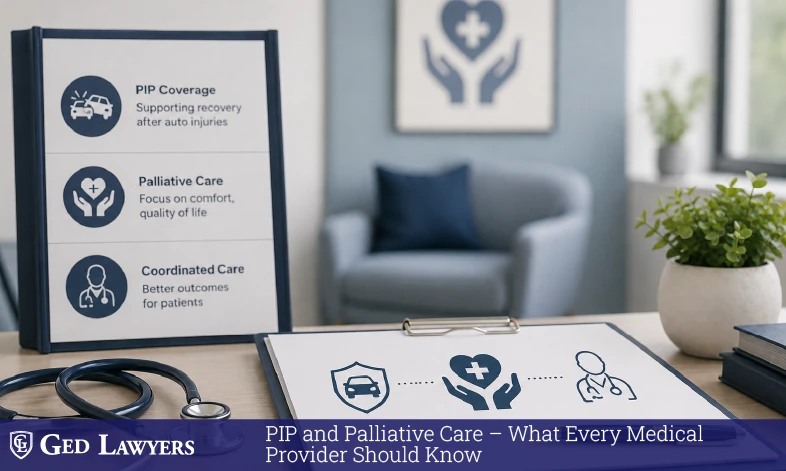
PIP and Palliative Care – What Every Medical Provider Should Know

Florida has long enjoyed its motor vehicle no-fault legislation intended to cover injured drivers after an accident, without first determining fault. This law, adopted by the state in 1979, requires that drivers within the state purchase personal injury protection coverage, otherwise known as PIP. In the event of an auto accident that results in bodily harm, this insurance policy is paid out, up to $10,000 in medical coverage, regardless of who caused the accident.

For years, PIP has been a seamless way to cover medical bills quickly for injured patients who need immediate medical attention, as well as for medical and emergency service providers to get paid for their services promptly. This immediacy is achieved because neither party has to wait until the courts decide fault, which often takes a minimum of two years to determine.

Although PIP has benefited both patients and medical providers for years in the state of Florida, many misconceptions about this law still abound. One such myth is that PIP does not cover palliative care. Unfortunately, many medical providers still believe this myth, which potentially leads to unclaimed, but legally covered, patient benefits. One goal of this piece is to discuss where this myth may have begun and to clarify that palliative care is, in fact, covered by PIP law in Florida.

Doctor checking on a patient

Is Palliative Care Covered by PIP in Florida?

Palliative Care

Since its inception, Florida’s PIP legislation has consistently come under fire, and this is especially true in recent years. The most consequential changes to this piece of legislation took place in 2012 and went into effect in early 2013. One particular amendment to the law altered the maximum amount any one individual may recover from their auto accident-related injuries.

In previous years, no strict qualifiers were in place to bar recovering the full $10,000. However, now to qualify for the maximum of $10,000, an individual must specifically visit a medical doctor (M.D.) or an osteopathic doctor (D.O.), who must diagnose the individual with an emergency medical condition, or EMC. Otherwise, the maximum an individual may recover is significantly reduced to only $2,500 to cover the cost of their injuries.

One reason for this change in PIP law was the goal of eliminating “soft tissue” auto accident injury cases. Such injuries consist of minor impact, or soft tissue injuries (as the name implies), such as whiplash, back or disc-related injuries, minor traumatic brain injuries, or concussions. Such injuries are typically difficult to pinpoint in terms of providing objective evidence for them; soft tissue injuries usually cause individuals plenty of pain and discomfort, but these are not easy to locate with routine medical exams, like with an MRI or x-ray.

For this reason, many medical providers believe that soft tissue injuries are generally not covered by PIP. Since many of these types of cases may require palliative therapies, medical providers further believe that palliative care is also not covered by PIP in Florida.

At the same time, since PIP doesn’t cover expenses related to pain and suffering, medical providers may take this to mean that palliative care intended to alleviate these stressors is likewise not covered by PIP.

It’s important to understand, however, that palliative care can be covered by PIP in some cases. This is true of cases in which a patient who suffers from a soft tissue injury sustains prolonged mental or emotional difficulties as a result of their injuries. Patients who develop these further issues may be in need of palliative care to improve their overall quality of life following an accident, and these services may be covered by PIP.

Defining Palliative Care

Palliative care is often confused for hospice care, but the two are not the same. Like hospice care, palliative care focuses on the holistic needs of a patient, including ways to relieve pain and suffering in order to enhance the patient’s overall quality of life while living with a challenging medical condition.

While this medical condition may be terminal, palliative care is not strictly limited to these types of medical conditions. Instead, palliative care services may focus on combatting various types of pains, emotional or psychological conditions or stressors, anxiety, loss of appetite, nausea, or sleeping difficulties, among other ailments, that may be a side effect of some other medical condition.

Palliative care is an interdisciplinary approach to therapy that addresses the spiritual, emotional, and communal needs of a patient. This type of care can be provided in various locations, such as hospitals, nursing homes, outpatient or specialized clinics, or at the patient’s home.

Typically, palliative care providers work closely with an individual’s family and medical care providers to determine a holistic plan of action in order to improve the patient’s quality of life, regardless of the stage of illness or point of diagnosis. While this type of care may not address an immediate medical condition, its effects are nevertheless substantial. A recent study published by the New England Journal of Medicine found a link between palliative care patients and longer life spans, as opposed to patients who did not receive palliative care.

Have More Questions? Contact Ged Lawyers Who Specialize in PIP Cases

If your patient has suffered a soft tissue injury or is considering palliative care services due to an auto accident, contact the law offices of Ged Lawyers today. Medical treatments for your patient, including potential palliative care services and therapies, may be covered by PIP law in Florida. However, insurance companies often dismiss soft tissue claims, even though this type of injury is the most common following an auto accident. In order to successfully secure your patient’s PIP benefits and get compensation for your services, you need a trusted and experienced legal team to fight for you.

The attorneys of Ged Lawyers offer a proprietary system for PIP representation as well as dedicated support staff to meet this goal. To learn more about PIP claims in Boca Raton, how Ged Lawyers can help, or to get your free initial consultation on a case, contact our attorneys today.
By : Clarissa Romero

June 15, 2021

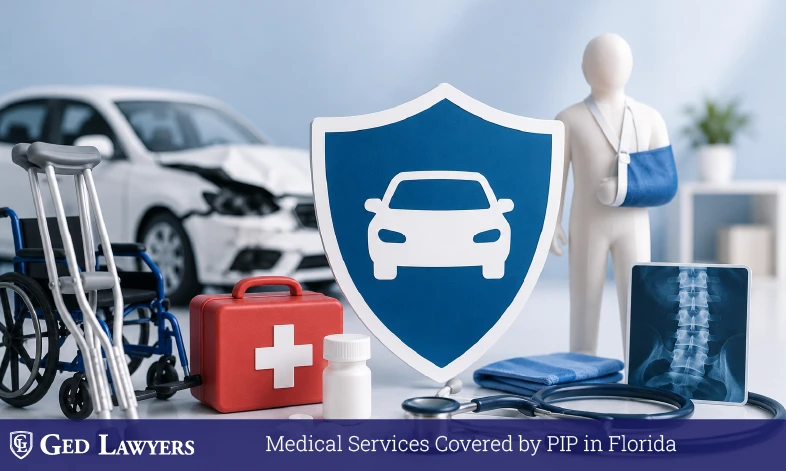
Medical Services Covered by PIP in Florida

Florida is one of 12 no-fault auto insurance states in the nation. The law mandates that motorists carry at least $10,000 in personal injury protection (PIP) coverage instead of having liability insurance. When a person is injured in a car accident, regardless of who may be at fault, they are entitled to receive up to $10,000 in compensation for hospitalization, medical treatment, and lost wages.

No-fault insurance in Florida was designed to facilitate quick payouts to individuals and medical PIP providers, without forcing parties to establish liability in a court of law. However, medical PIP may not cover the full extent of treatment and hospitalization that injured parties face. When the damages exceed the allowable payment, injured parties may sue to recover additional damages. Motorists can also add Med Pay insurance to their policies in order to supplement their basic coverage.

What follows is a closer look at how PIP works in Florida, which medical services and providers are covered by PIP, and how the payment process works.

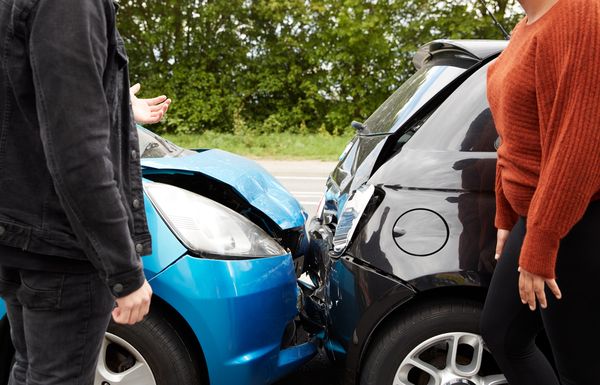
Car bumped into rear end of another car

Medical Services Covered by PIP in Florida

Female doctors

Florida Statute 627.736 (1)(a) stipulates which medical services are covered by PIP. The insurance covers a broad range of initial and follow-up services, including:

  • Prescription medication and pain management
  • Radiography
  • Orthopedic medicine
  • Hospitalization
  • Emergency dental treatment
  • Chiropractic treatment
  • Diagnostics and laboratory services
  • Ambulatory services
  • Rehabilitation and physical therapy
  • Surgical intervention

Although PIP provides extensive coverage, it does have procedural stipulations. They are as follows:

  • Treatment must occur within 14 days of the auto accident.The insurer will not accept a claim for treatment outside that window.
  • Claims may be investigated for fraud.Insurers have 60 days to investigate an injured motorist’s claim. Nonetheless, they’re still required to pay the claim within 30 days—even if they do suspect fraud.
  • Medical claims must be properly documented, coded, and signed. Florida Statute 627.736 (5)(d) provides explicit directions for doctors and facilities submitting PIP claim forms.

Unlike some types of liability insurance, PIP in Florida also covers payments of up to 60% for lost wages due to an accident. In order to get these benefits, injured motorists must submit a wage and salary verification form filled out by their employer.

What Services Aren’t Covered by PIP?

Some alternative medical treatments aren’t covered by PIP. Statute 627.736 (1) (a) explicitly names massage and acupuncture as services that are not covered.

There are also some conduct exclusions noted in the statute. Medical services rendered to the injured motorists and household relatives are not eligible for PIP payments, if the person operating the vehicle failed to obtain the implied or spoken consent of the insured motorist.

Moreover, if the injured person harmed themselves intentionally or was injured while committing a felony, their medical treatment isn’t eligible for PIP compensation. In such cases, Florida Statute 627.736 reads that the 30-day payment provision “is held in abeyance, and the insurer shall withhold payment of any personal injury protection benefits pending the outcome of the case at the trial level.”

Details of PIP Payments to Medical Providers

As a medical provider, you can receive direct compensation from insurance companies if the patient countersigns the billing invoice. However, there are limits to the payout, and they are as follows:

  • PIP only covers 80% of a patient’s medical costs. If an injured motorist suffered $6,000 worth of injuries, they are only eligible to receive $4,800.
  • Benefits for non-emergency care are lower. The maximum amount for injuries that aren’t deemed emergencies is $2,500.

If you’re a medical provider operating in the Sunshine State, you have the right to sue for PIP compensation if an insurance company denies any part of your claim or fails to respond within the 30-day period. Ged Lawyers is well versed in PIP legislation. In fact, 85% of our lawyers and support staff specialize in handling these cases. We know how insurance companies think and we consistently beat them at their game, recovering millions of dollars’ worth of damages for our clients.

How Does Med Pay Work With PIP?

Because PIP coverage is capped at $10,000, some motorists opt to supplement their coverage with Medical Payments, or Med Pay. Med Pay and PIP in Florida are both no-fault coverages, but only Med Pay is optional.

Unlike PIP insurance, Med Pay only covers medical bills and funeral expenses. It doesn’t compensate the insured for lost wages. Neither coverage compensates for pain and suffering; An injured motorist must sue to recover those damages.

When used in combination with PIP insurance, Med Pay provides supplemental benefits as follows:

  1. It pays for the 20% that PIP insurance does not cover.
  2. It may cover death and funeral benefits beyond the $5,000 that PIP insurance provides.
  3. It may provide health benefits coverage beyond the maximum $10,000.

Whether Floridians need Med Pay depends on their health insurance coverage. Because it’s considered a supplemental policy, Med Pay can’t take the place of an individual’s primary health insurance, and those insurance benefits will tap out first. However, Med Pay can pick up the tab for deductibles and co-pays that the injured motorist would otherwise have to pay.

Concluding Remarks

PIP in Florida covers a broad range of medical services. In fact, the law only excludes two common services—massage and acupuncture.

That said, insurance companies are on the lookout for fraud and will investigate and deny personal injury protection claims in Boca Raton, FL for a variety of reasons. Moreover, when an insurance company suspects foul play or the commission of a felony, they’re not required to pay claims within the usual 30-day period. Medical personnel must wait pending the outcome of a trial to receive compensation.

At Ged Lawyers, we specialize in recovering damages for doctors who have been denied PIP insurance claims. If you’re a medical provider who believes you’re entitled to compensation for services rendered under the law, Ged Lawyers would love to hear from you. Contact us toll-free at 844-443-3529 or locally at 561-995-1966 and let us know how we can help.

By : Clarissa Romero

June 15, 2021

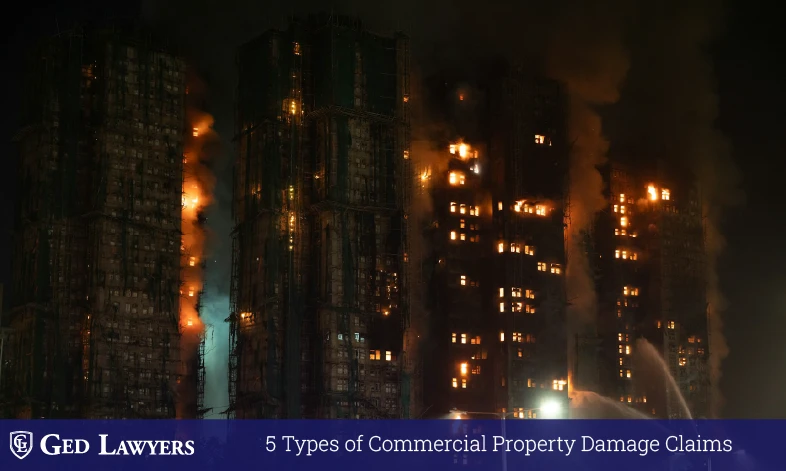
5 Types of Commercial Property Damage Claims

Both small and large business owners often take out insurance policies to cover their brick-and-mortar establishments. Commercial property insurance of this kind is a great way to protect against unexpected property damage in the future. However, it can be easy for business owners to quickly forget the details of their policies, as the demands of the business rightly capture their attention. When property damage occurs later down the road, it isn’t uncommon for many to wonder whether their insurance will cover the costs.

Below, we discuss the five most common types of commercial property damage claims. Depending on your insurance policy, property damage sustained by these common causes may or may not be covered. It’s a good idea to speak to a lawyer about your claim before approaching your insurance company in order to best prepare your claim for approval.

Commercial Property Damage Claims

Why Commercial Property Owners Should Have Insurance

Commercial property is any piece of real estate dedicated to business activities. This means that the commercial property you own is really valuable, as it represents your livelihood and the livelihood of your employees. This is the biggest and most important reason to purchase insurance for your commercial property, because if something were to happen to it or the physical assets inside were lost, the business could suffer major, if not devastating, losses. While you may take other steps to secure the premises from property damage, this security is never truly a guarantee. For these reasons, it makes good business sense to purchase commercial property insurance as a safeguard.

But what does this type of insurance actually cover? There are a few types of damage to commercial property that are quite common. These may or may not be a part of your commercial property insurance policy, since some types of coverage are optional and come with an additional price tag. For example, damage caused by earthquakes or floods isn’t typically included in a standard commercial property insurance policy, although this may vary by geographical area.

The five most common types of commercial property damage claims consist of burglary and theft, storm damage, fire damage, window damage, and roof damage. Below, we discuss each of these types of claims and if commercial property insurance companies typically approve them.

Burglary and Theft

Commercial property is a frequent target of burglary, vandalism, and theft for a few reasons. First, since these buildings or locations are used for business operations, commercial properties typically house valuable assets and equipment. Further, since commercial property is often largely uninhabited after business hours, these buildings and commercial areas are relatively easy targets for mischief.

Unfortunately, insurance companies often deny theft and burglary claims. This is because it can be difficult to prove that a break-in occurred, that certain items were stolen, or the value of the stolen items.

Storm Damage

Storm destruction is a common and particularly devastating cause of commercial property damage. Powerful storms can cause power outages, knock down trees, break windows, damage inventory or machinery, blow off roofs, and even cause structural damage to the entire building. While storm damage claims are more manageable than are claims of burglary or theft, it’s important to detail the full extent of the damages in order to get the coverage your business deserves.

Fire Damage

The ruin that fires cause is another particularly challenging type of property damage for commercial property to sustain. If not controlled and extinguished quickly, the entire building and all the assets inside are at risk. An engulfing fire can therefore be devastating. To successfully file a fire damage claim, you should photograph damaged items and the building itself. And keeping as much of this evidence as you can without discarding it is important, however, just in case your insurance provider requests to see it in person.

Window Damage

Perhaps surprisingly, window damage claims make the list of top commercial property damage claims. This type of damage can occur due to storms, high winds, or hail and doesn’t necessarily involve shattered glass. Structural or seal damage to window and fenestration systems are often overlooked since they’re not readily apparent. Speak with an experienced attorney to make sure you’re not omitting window damage in your claim.

Roof Damage

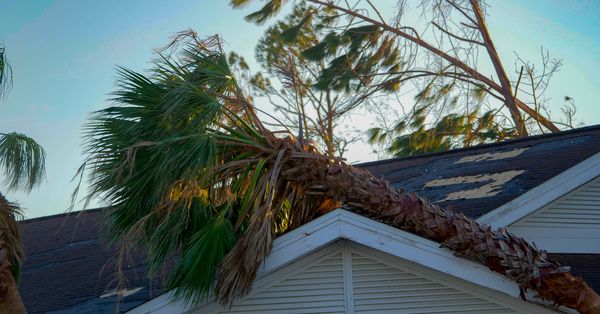
Storms are the most common cause of roof damage, as strong winds, down-pouring elements, flying debris, and falling trees can impact the structure of a building’s roof. It’s not uncommon for insurance providers to deny roof damage claims by arguing that the roof was old, that the damage was a result of normal wear and tear, that it was built from known risky materials, or that the business owner in some way caused the damage.

When to Contact a Lawyer

You may want to consider contacting a lawyer as early as possible after the damage occurs. Since your commercial property functions as a place of business, ensuring that your claim gets approval is crucial to bouncing back. Unfortunately, insurance providers are often quick to deny claims, as they don’t want to pay out if they don’t have to. For this reason, an experienced attorney is an asset to have at your disposal at the outset and can improve your chances of securing an approved claim on the first try. If you decide to file the claim yourself and get denied, you can always contact an attorney to help you take the next steps. Either way, a property attorney is well equipped to decipher your insurance policy and how the law applies to your case.

Have Questions? Contact Our Experienced Property Attorneys Today

If your commercial property has recently suffered damage, you may have a valid commercial property insurance claim. However, navigating your long and complex insurance policy can feel overwhelming. The attorneys at Ged Lawyers are happy to step in and guide you through this difficult task. If you have more questions about where to start, what to do now, or how to file your claim, contact us today.

By : Clarissa Romero

May 26, 2021

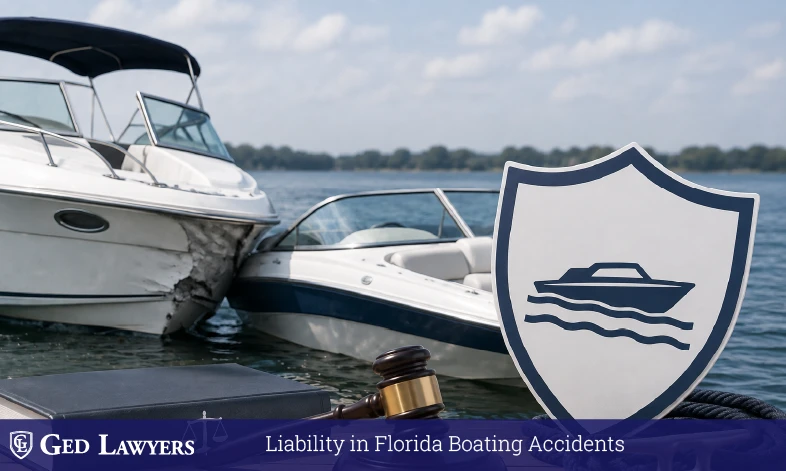
Liability in Florida Boating Accidents

With thousands of miles of coastline to enjoy, it’s no wonder that Floridians love boating. There’s nothing more relaxing than getting out on the water, kicking back with friends, and reeling in the day’s big catch.

Unfortunately, Florida boating accidents put a damper on this popular recreational activity. In 2019, Florida led the nation in the number of registered vessels: 935,742 in total. The Sunshine State also leads the nation in boating accidents. The state had 679 boating accidents in 2019; more than double that of California, which comes in a distant second.

Given the prevalence of boating accidents, Ged Lawyers offers this quick guide to understanding boating laws in Florida and the procedures to take in case you’re the victim of someone else’s negligence.

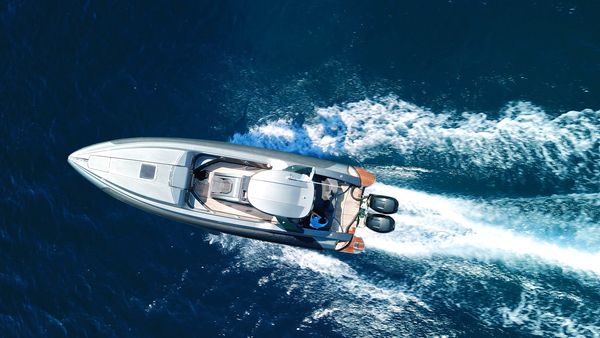
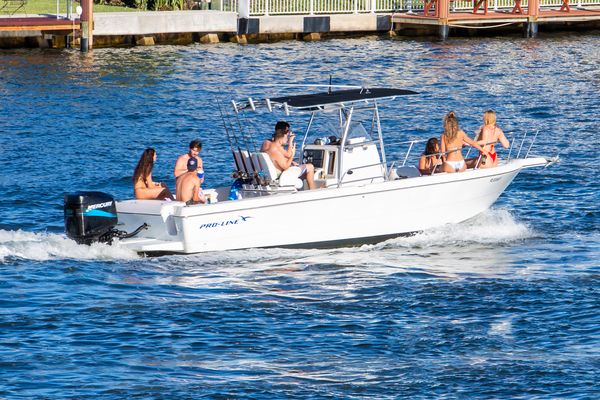
Speed boat in an ocean

Overview of Boating Laws in Florida

Chapters 327 and 328 of the Florida Statutes contain a full description of boating laws in Florida. Here are some highlights you need to know:

  • There is no minimum age for operating a boat, but operators under the age of 25 must take a boater’s safety course.
  • Vehicles must be registered and numbered within 30 days of purchase. Operators need to obtain a Florida registration decal and display it on the port side of the boat, either before or after the registration number.
  • The vehicle operator must report any accident in which there is personal injury or property damage in excess of $2,000 by giving notice to the Florida Fish and Wildlife Conservation Commission, the county sheriff, or the police chief of the municipality where the incident took place. It’s unlawful to leave the scene of an accident without properly reporting it.
  • Operating a boat with reckless disregard for the safety of others is a first-degree misdemeanor.
  • Boat operators must obey posted speed limits.
  • It’s illegal to operate a boat under the influence of drugs or alcohol. Authorities can stop you and ask you to take a sobriety test if they suspect you’re boating under the influence.

What to Do If You’re Involved in a Boating Accident

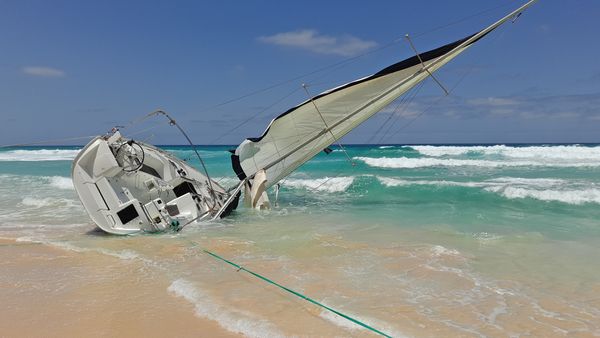
boat washed up on beach

As already mentioned, it’s illegal to leave the scene of a boating accident without reporting it to the proper authorities, so the first thing you need to do is stay put. Florida state law also mandates that you provide assistance to others at the scene and exchange written information with the other operator.

Federal law says you must report a boating accident within 48 hours if the vessel or its equipment causes anyone’s death within 24 hours, there is an injury requiring first aid, or a person’s disappearance is likely due to injury or death. Likewise, federal law requires you to report within 10 days if the accident causes more than $2,000 worth of property damage or a vessel is lost at sea.

Leading causes of boat accidents include boating in bad weather conditions and speeding. As with an automobile accident, it’s a smart move to document evidence. Take photos of property damage and injuries sustained at the scene, if possible. If there are witnesses, get their names and contact information.

How Is Liability Determined?

Establishing who is liable in a boating accident boils down to determining negligence. A boat operator may be deemed negligent if any of the following apply:

  • The operator disregards posted speed limits or fails to slow down in dangerous conditions.
  • The boat captain fails to provide proper safety equipment.
  • The boat captain operates the watercraft under the influence of drugs or alcohol.
  • The vessel is improperly maintained.
  • The operator takes out the vessel in poor weather.

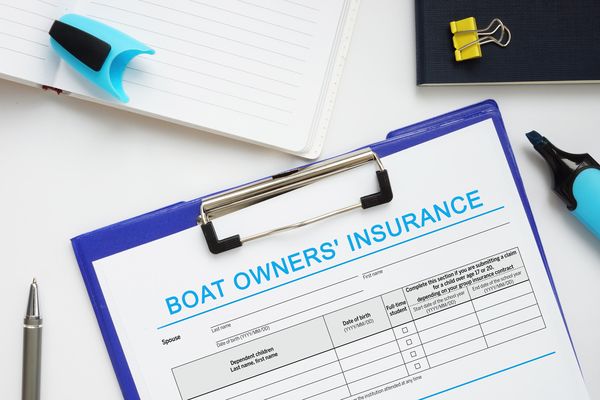
Boat owner's insurance

In other words, if the captain doesn’t behave as a reasonable boat operator would, they may be liable in the event of an accident.

Recreational boat operators with paying passengers may also be liable, even if they ask passengers to sign liability waivers. Such waivers are only enforceable if the waived rights are clearly defined and an average person can readily understand the language.

Liable to who is another relevant question when it comes to Florida boating accidents. The incident could easily fall under general maritime law instead of Florida negligence law, since general maritime law applies to any navigable body of water that could lead to the ocean, including the Intracoastal Waterway. It’s important to note that these two governing bodies have different statutes of limitations. General maritime law follows the Uniform Statute, which is three years. Florida negligence law has a two-year statute of limitations.

When and How to File a Claim

You already know that Florida law requires you to notify the proper authorities whenever there are injuries or property damage at the scene of a boating accident. In addition to helping victims, first responders will investigate the incident.

When law enforcement has completed its investigation, it typically files a police report. Authorities may also make arrests at the scene. In the absence of a police report, the boat operator must file an official report.

Your behavior at the scene and immediately after the accident is critical to the outcome of any personal injury determination.

  • If you suffer an injury, seek medical help. Medical care provides verification of the damages for which you are seeking compensation.
  • Make sure you have the name, address, and boating registration number of the other operator, if applicable.
  • Collect all evidence at the scene. You may think you’ll remember specifics, but accidents impair clear judgment and people tend to forget relevant details quickly. Granted; nothing beats photographic evidence. However, if you have a notebook, jotting down facts to remember later is also a great strategy.

Although you must take immediate action to document your damages and establish the other party’s negligence, Florida law gives you two years from the date of the accident to file a boat accident claim.

Have You Been in a Florida Boating Accident?

Sometimes liability is an open-and-shut case. But why take chances when your bottom line is at stake? Ged Lawyers can help you navigate the complex world of filing a boating accident claim and determine whether you need a personal injury lawyer to represent your case in court. Our team of committed, compassionate attorneys is just a phone call away. Dial 561-995-1966 or toll-free at 844-443-3529 to schedule your free case review today. You can also contact us online.

By : Clarissa Romero

May 26, 2021

Common Boating Accidents in Florida: Tourism Industry Facts

For most people, a Florida vacation means one thing: a chance to be on or near the water. Whether you prefer pontooning around a lake or a deep-sea fishing trip, boating and Florida go hand in hand.

Florida’s watercraft owners often tap into the tourism industry as a source of supplemental income. But as with every business venture, boat charters carry risks. Boating accidents are all too real and can have devastating consequences.

To better protect yourself and your charter or rental business, you should be aware of typical patterns in Florida boat accidents. This article also contains valuable tips for lowering your risks and reducing your potential liability when tourism fun goes awry.

Boating Accidents

Common Boating Accident Statistics in Florida

The Florida Fish and Wildlife Conservation Commission publishes annual data on watercraft accidents that occur throughout the state. Unsurprisingly, Florida had more recreational accidents than any other state in 2019. There were at least 723 Florida boating mishaps that caused a minimum of $2,000 in damage in 2019.

As a tourism-based rental and charter owner, you can learn valuable information from this data. For example, the following types of common recreational boating accidents present an opportunity for avoiding risky situations. Proactive management can go a long way in reducing the likelihood of injuries, damage, or death.

Open Motorboat Accidents Are Most Common

It’s not shocking for Miami-area charter owners to learn that open motorboats have the most common involvement in boating accidents. In 2019, there were 393 such accidents in Florida.

Open motorboats are a popular tourism rental because vacationers can use them for fishing offshore or recreational cruising among the many channels, inlets, and canals. However, their power can cause inexperienced operators issues. Additionally, tourists can get in trouble when they take an open motorboat too far out from shore.

If you rent any type of watercraft to tourists, it’s vital that you’re aware of the risks. After open motorboats, the most common vessels involved in Florida boating accidents are, in descending order:

  • Personal watercraft
  • Cabin motorboats
  • Sailboats
  • Pontoon boats

While pontoon rentals are safer due to their restricted areas and speed, this doesn’t mean they’re without risks. Personal watercraft like Jet Skis and WaveRunners cause even more problems because of their small size, high power and acceleration rates, and tendency to flip over or catch fire. Most personal watercraft also have limited safety features available and don’t include brakes. People can rent them in many locations at low prices, which puts a number of inexperienced riders on the water. A lack of familiarity with their unique controls can also lead to collisions and other accidents.

Distracted Boating Is a Problem

According to the statistical report, the most common cause of Florida watercraft accidents was no proper lookout or inattention. Just like distracted driving is an affliction on roadways everywhere, distracted boating can lead to serious accidents and injuries.

Tourists rent or charter a boat for a day of fun in the sun. However, they must be informed that boating is a serious task that requires constant attention. The operator must be aware of their surroundings at all times.

Likewise, inexperienced operators are the second most common cause of Florida boating accidents. Unprepared drivers cause more vessel accidents in Florida every year than weather and equipment failures. Before you rent or charter your equipment, ensure you find someone who takes the role of captain seriously.

Florida Boating Accidents Most Likely Occur During Cruising

If distracted and inexperienced operators are most likely to cause Florida boating accidents, then when are they most likely to happen? Even though there are more opportunities for collisions when watercraft are near docks or maneuvering within marinas, cruising is most dangerous.

The 479 accidents recorded while cruising show that operators tend to get into trouble once out on the water. It’s possible drivers relax once they clear the piers and stop paying the necessary amount of attention to operating the watercraft. It’s also a possibility that open water causes operators to become disoriented, panicked, or unable to fully control the vessel.

Men Are Much More Likely to Be Driving at the Time of Boating Accidents

A full 85% of reported Florida boating accidents happened while a man was at the helm. Other interesting crash stats include nearly half of operators involved in crashes having some prior boater education. More than half had at least 100 hours of vessel-operating experience. Finally, the following three age groups each represent approximately 30% of all Florida boating accidents: 22-35, 36-50, and 51+-year-old operators.

Types of Boating Injuries From Watercraft Accidents

Injuries from Florida boating accidents can range from bumps and bruises all the way to drownings. In 2019, there were 61 watercraft accidents where someone fell overboard. The currents off of Miami are swift, and even a strong swimmer can succumb quickly. The risk heightens if the passenger is drinking or not wearing a floatation device. Falls overboard were the number one cause of Florida boating accident deaths in 2019.

Operating a watercraft in busy areas also puts bystanders at risk. It’s not just manatees that suffer from propeller strikes in South Florida channels. Whether tourists or locals, swimmers can suffer grievous cuts, lacerations, and broken bones if a propeller strikes them. Warning passengers about floating near the prop can prevent unnecessary health risks.

The wet surfaces of a vessel make them risky common boating injuries like slips and falls. Even if the charter is operating flawlessly, a tourist outing can end poorly if a passenger falls and hits their head. Neck and back injuries, as well as broken bones and bruises, can result from a slip on board.

Tips to Avoid Common Boating Accidents and Injuries

Before chartering or renting to tourists, have a plan to cover boating safety rules and provide boating and water safety tips to your clients. A handy form or booklet containing essential advice, such as wearing floatation devices at all times, will help your business appear more professional. It can also reduce your liability should the worst occur.

Boating safety tips in Florida include reminding all potential operators about not drinking while boating. Additionally, depending on the type of watercraft you offer, you may limit drivers to those with boater training or licensure. While Florida doesn’t have a boating license, the state does require certain operators to satisfy boating safety education requirements. Tourists may also obtain a temporary certificate to operate a water vessel while visiting Florida. Though licensed or experienced boaters are involved in accidents, matching the vessel to the driver’s skill level can help provide a safe experience for everyone.

Meet With Skilled Florida Boating and Personal Injury Attorneys

In South Florida, things can change quickly on the open water. Instead of waiting for trouble to hit your charter or boat rental business, contact a personal injury lawyer today. The experienced professionals at Ged Lawyers can review your policies and procedures and offer advice to make your operations safer.

Lowering your risk now is more cost-effective than waiting until after an accident occurs. The team of attorneys at Ged Lawyers has experience dealing with all types of South Florida boating accident claims. We can offer your business the knowledge we have accumulated from those cases. No boating trip can ever be completely safe, but our boating safety tips can help your company immediately lower its risk!

By : Clarissa Romero

May 26, 2021

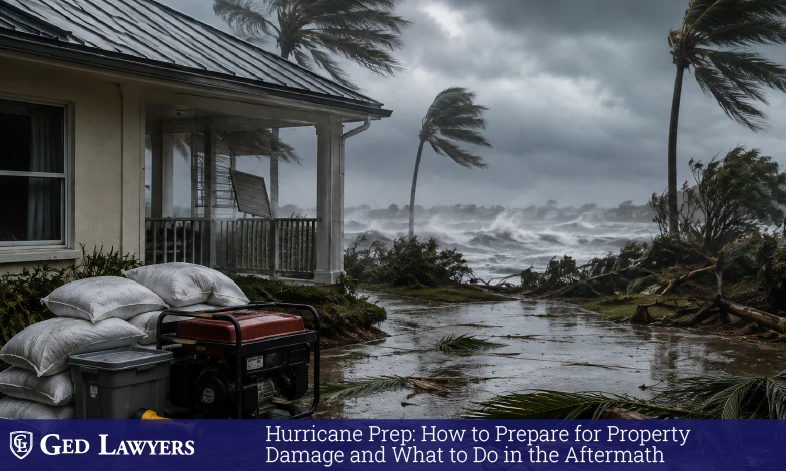
Hurricane Prep: How to Prepare for Property Damage and What to Do in the Aftermath

Hurricanes are a fact of life in Florida. As the winter months come to a close, homeowners across the state are prepping for hurricane season. This preparation routine can involve many moving parts, including fortifying the physical home or safeguarding valuables. One important step to take in this process may involve compiling information that would help you file a property damage insurance claim. Starting well before a hurricane strikes may leave you in a better position than waiting to file after a devastating storm damages your home. To do so, understanding homeowners property damage coverage becomes vital. You’ll need to know what kind of damage hurricanes cause and if your insurance policy covers it.

Below, we outline what to do to prepare your home for a hurricane and how to file a claim after a storm. To learn more, contact our offices to schedule a free initial consultation.

Hurricane Preparation

Steps You Must Take to Prepare Your Home for Hurricane Season

Hurricane preparedness in Florida is a hot topic as the spring approaches. Some steps to take before it’s in full swing include:

Take photos of your home -A critical piece in filing a successful property damage claim involves providing evidence of the extent of the damage. This means that the better your evidence, the more likely your claim will receive approval. Many homeowners neglect this aspect of hurricane preparation and later have a difficult time securing the funds they need to fully restore their homes. While it may seem tedious now, it’s a good idea to take photos of both the inside and outside of your home, as well as your valuable belongings, just in case you need to show them to your insurance provider later.

Read through your homeowners insurance policy -Another crucial step is reading through your insurance policy to really understand what it covers. It’s not uncommon for homeowners to neglect this step only to find out they can’t cover their hurricane deductible after a devastating storm. By reading through your policy before hurricane season, you can rest assured your home is protected by setting aside enough money to cover your deductible, or you can purchase additional coverage to protect it. Boca Raton flood damage, a common side effect of hurricanes in Florida, is typically not covered. You should consider adding this coverage for extra protection. Additionally, consider backing up your copy of the policy in electronic form so you can access it again if your physical copy is destroyed in the storm.

homeowners insurance policy

Make a list of nearby contractors – The aftermath of a hurricane in Florida can leave entire communities devastated, both physically and psychologically. Living through a hurricane can be mentally and emotionally draining, and these effects definitely take their toll on survivors. Looking for contractors to fix your home after a storm can feel overwhelming if you are already suffering these effects. Making a list of contractors now can save you time and energy after a storm.

What Kinds of Property Damage Do Hurricanes Cause?

Hurricanes in Florida are prone to causing specific types of property damage. High winds can impact or completely remove siding, shingles, or decks, while debris picked up by the wind can cause window damage. If strong enough, hurricane winds can even snap trees and power lines, leading to severe roof damage. Flooding is a common byproduct of hurricanes, so water damage in basements and main levels of buildings is also quite common.

 What Property Damage Is Covered?

Homeowners in Florida should expect to pay a deductible for hurricane damage. For the damage to count as caused by a hurricane, the National Weather Service must declare the storm a hurricane. You can expect any damage that occurs after a hurricane watch or warning is declared, and up to 72 hours after the storm passes, to be covered by your policy. However, flood coverage is typically not required by the state, so your homeowners insurance policy may not cover floodwater damage. if this is true of your policy, then you may want to consider purchasing this extra coverage as a precaution.

What Do You Do After the Storm Hits?

Take photos of the damage -After a hurricane in Florida, your home may suffer extensive damage. It’s important to take photographs of everything, recreating the photos you took prior to the storm. Check for hidden damage, like damage to the structural integrity of the building, so you can file this in your claim as well. Document the walls, ceilings, roof, and floors of your home, and try to get as many angles as seems reasonable.

File a hurricane damage claim – After photographing the damage, contact your insurance provider as soon as possible to report the damage. File a claim as soon as you can in order to speed up the process. You may encounter surprises during this process, like a high deductible you weren’t planning for, or even a denial of your claim if you didn’t file the claim correctly. You may want to contact a property lawyer to help you during this time.

Get in touch with a contractor for repairs -Next, you’ll want to pull out that list of contractors you created and start making calls. The quicker you can get someone to your home, the faster it can be repaired and returned to normal. You can speak to your insurance provider about contractor work and who will pay them according to your policy.

File Your Hurricane Damage Claim Using Ged Lawyers

In the aftermath of a hurricane, homeowners are often left feeling overwhelmed and stressed. Surviving a hurricane is no small matter, and the last thing you want to do is deal with your insurance company. Getting a head start on this process is the quickest way to restore your life back to normal. And this process need not be unnecessarily difficult. An experienced property attorney can guide you through securing disaster relief smoothly and successfully.

If you are having difficulty filing your property damage claim, contact the experienced attorneys of Ged Lawyers. Our goal is to make the process easy for you, while also fighting to secure proper compensation. To learn more about hurricane damage claims, how to prepare for a storm, or what to do if your claim is denied, contact us today.

By : Clarissa Romero

May 12, 2021

When Do I File a Property Damage Claim?

Life is picture-perfect in the Sunshine State—until hurricane season hits. Flooding, storm surges, toppled trees, and toxic mold infiltration are just some of the types of property damage in Florida that can destroy the home or business you invested so much time and energy into making yours.

Extreme damage requires you to file a property damage claim. But what about cases that are less clear-cut? Knowing when to file a property damage claim—and the proper steps to take—is crucial information that can save you time, money, and a great deal of aggravation.

Property Damage Claims

Why Your Timing of Filing a Property Damage Claim Is Important

Theoretically, you have years to file a property damage claim. But waiting until the official statute of limitations runs out is not a good idea. For one thing, delaying when you file a claim may raise red flags with your insurer. Moreover, if you delay, you run the risk of missing policy deadlines. In some cases, you could be forced to forfeit a claim.

When you experience property damage, you should call the insurance company as soon as possible to announce your intent to file a claim. If you don’t speak with a live person at that time, the insurer has 14 days to contact you.

After establishing initial contact, you’ll need to file a proof of loss statement by the deadline specified within your policy. Your insurer must begin the investigation within 10 days of receiving this document.

The insurance company has 90 days from the time it completes the investigation to notify you of whether it accepts or denies your claim. If the insurance company decides to compensate you for the damages, it has 20 days from the settlement date to make good on the decision.

An insurer that doesn’t meet these deadlines may be acting in bad faith. Consulting with a property attorney can help you understand the implications of this behavior and advise you on the best way to proceed.

Getting to Know Your Insurance Policy

The most important action you can take as a homeowner or business owner to protect your property occurs long before filing a property damage claim. The simple act of learning what’s in your insurance policy can mean the difference between successfully filing a claim and having to pay out of pocket for expenses.

  • Basic policiescover your home or place of business for certain designated perils only, such as fire, hail, explosions, and lightning damage. Basic policies usually cover loss or damage of personal property and the structures that house your personal property or business equipment. Depending on the policy, many exclusions may not be covered.
  • Commercial package policies (CPPs) are for business owners who need a higher level of coverage for their commercial property insurance policy. A CPP allows you to add certain exclusions.
  • A business owner’s policy combines hazard protection with liability coverage, protecting a business owner in the event that someone suffers injuries on the premises.

It’s important to understand policy exclusions to get a full picture of property damage coverage. Exclusions are perils not covered by the policy. You need supplemental insurance in order to receive coverages for these perils. In Florida, common exclusions are flood, ordinance or law coverage, earthquakes and volcanic eruptions, spoilage coverage (for businesses with perishable stock), and coverage in case of damage due to power interruptions.

You should also understand that insurers may view some perils as the natural consequence of others. If your policy doesn’t cover flood damage in Boca Raton, it will also not cover the toxic mold infiltration that results from flood damage.

Statute of Limitations in Florida for Property Damage Claims

According to Chapter 95 of the 2020 Florida Statutes, Floridians typically have two years from the date their home or business was damaged to file a claim. The two-year statute of limitations covers most types of property damage, including theft and vandalism.

How long do you have to file a property damage claim when a hurricane or windstorm destroys your home, though?

You may not realize that the statute of limitations for these specific events is different. Chapter 627 of the 2020 Florida Statutes states that you must submit a claim to the insurer “within [three] years after the hurricane first made landfall or the windstorm caused the covered damage.”

Finally, as a property owner, you’re entitled to an extra year if the insurer acts in bad faith after receiving the initial claim. Some insurers even cancel a policy in order to avoid compensating you for damage. If your insurance company denies your claim, offers a lowball settlement, or cancels your policy, the company may be in breach of its contractual responsibilities. In that case, you have five years from the onset of damage to file a claim.

When Should You File a Property Damage Claim?

It really depends on the specific details of your insurance policy. If your deductible is $2,000, and the damage comes to $2,500, it may not make sense to file a property damage claim. You have to factor in things like increases to your premium over time before deciding if it’s worthwhile to seek compensation.

It goes without saying that you won’t be able to collect a dime for an event you aren’t insured against. Once again, the most important thing you can do is read your policy carefully and understand the exclusions.

Is Your Insurance Company Giving You the Runaround?

Was your property damage claim ignored or denied? Do you suspect your insurer is acting in bad faith? You’re not alone. Ged Lawyers has recovered millions of dollars in damage for our clients. We have the expertise and clout to stand up to insurance companies and know exactly how to get their attention. Want to speak to a property attorney about your case? Please contact us at 561-995-1966 or toll-free at 844-443-3529 to schedule your free case review today.

By : Clarissa Romero

April 13, 2021

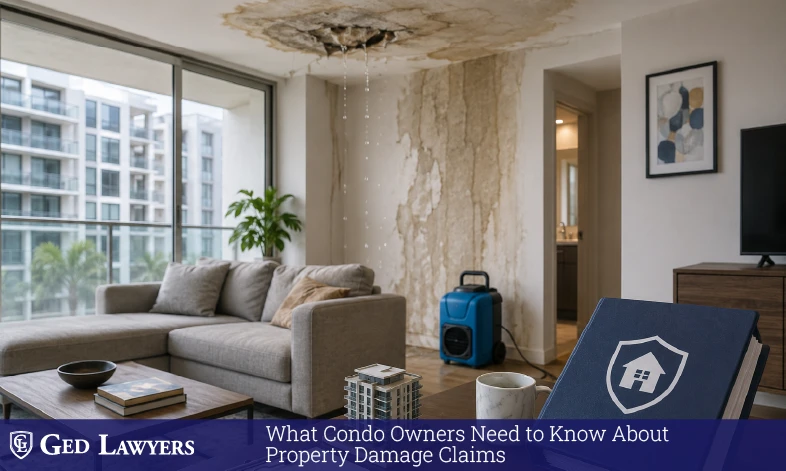
What Condo Owners Need to Know About Property Damage Claims

Florida boasts a significant number of condominiums, and the number of townhomes and condos sold in 2020 actually exceeded 2019 sales. A look at the past 10 years reveals that sales remain relatively steady overall. At the same time, there are around 48,500 HOAs in the state, with a collective 9.57 million individuals living in HOA communities. While a significant portion of these figures pertains to single-family homes, condo HOAs account for a great deal of them as well.

This article tackles the difference between condo ownership and homeownership and how belonging to an HOA introduces complexities not found in the typical home insurance policy. We also discuss common types of condo property damage that can occur in the state of Florida and whether to expect your insurance or your HOA’s insurance policy to cover that damage. Lastly, we discuss the finer details for filing a property damage claim and offer our legal services to those who need help securing approval.

The following provides a general guide to the topics introduced above. For more specific information, or to discuss the details of your case, contact the experienced property attorneys of Ged Lawyers.

Condo

How Condo Ownership Differs From Homeownership

Damaged condo

One of the major differences between condo ownership and homeownership is that homeownership doesn’t necessarily require that one join an HOA. Condos, however, are units of larger buildings that typically offer shared common spaces and amenities. For this reason, condo owners are required to pay fees that are pooled together and put toward building maintenance, upkeep, and renovations.

This difference can also affect the way insurance claims apply to condominiums. Condo association fees also go toward an insurance policy, typically referred to as the master policy, which covers the entire building or set of buildings as well as any shared spaces. For this reason, damage that occurs to a condo may in some instances be covered by the HOA policy and not by the condo owner.

Types of Property Damage That Can Occur to Condos in Florida

Condos in Florida are largely susceptible to the same kinds of property damage that condos in other parts of the country are. For example, this can include damage caused by wind, water, fire, theft, or vandalism. However, given its location on the Gulf of Mexico, Florida is also prone to extreme storms and hurricanes. Since many condominiums dot the shoreline, most Florida condos are further susceptible to this kind of damage as well. Hurricane damage typically consists of any destruction caused by extreme winds or the resultant flood damage that often follows strong storms.

Since insurance policies may vary, coverage for these types of property damage may or may not be part of your plan. For example, many policyholders in Florida assume that their plans cover hurricane and water damage from floods, only to find out later that this isn’t the case. It’s a good idea to double-check your plan and add any additional property damage coverage you may need to insure against specific incidents.

What Damage Does My Condo Insurance Cover?

Condo insurance varies by policy, provider, and any additional coverage plans an individual may choose to purchase. However, condo insurance policies typically cover damage to the interior of one’s own unit. This means your policy won’t apply to shared spaces with the larger condo, and likewise, the condo association’s insurance policy won’t cover damage to your unit.

There are exceptions to this latter rule, however. For example, a condo association’s insurance policy may cover damage to your roof or floor or damage caused by a structural issue in the building, since these situations may be considered “shared spaces.”

Will My HOA Cover Property Damage?

The fees that an HOA collects from its members are often designated to a number of community needs. This money can go toward things like general maintenance and repairs or toward an insurance policy to protect against larger, more expensive damages to the property.

These insurance policies typically cover damage that occurs to the condo’s shared spaces, such as lobbies, pools, recreational facilities, private roads, sidewalks, hallways, stairwells, and elevators. These policies also insure the building itself, providing funds for damage that occurs because of structural issues. Your condo association’s insurance policy may even cover your unit’s ceilings, floors, or walls if they’re considered shared spaces, since your upstairs, downstairs, and adjacent neighbors share them with you.

Details of Filing a Claim

If you’re unsure whether you should file a claim or if it’s the HOA’s responsibility to file a claim for property damage, first consider where the damage is located. If it’s possible this area qualifies as a shared space, it may be the HOA’s responsibility, while damage within your own unit is likely your responsibility. Next, consider the type of damage that occurred. If the damage was the result of poor maintenance or upkeep by the HOA, then it’s possible that this damage is the HOA’s responsibility.

Being away from your condo at the time damage occurs doesn’t necessarily mean that the HOA will cover it. If the damage occurred in your unit and was the product of your actions, like starting a fire because you accidentally left a candle burning, you’ll likely need to file a claim with your own insurance provider. However, if your unit suffers damage due to negligence by the HOA, such as failing to fix a leak in the building’s roof that then causes mold to grow in your unit, the HOA may need to file a claim for this damage.

Need More Information? Contact Ged Lawyers to Learn More

To learn more about condo property damage claims in Florida, speak with one of our experienced attorneys. We can discuss the specifics of your individual case and work out a plan for securing your approval. To schedule your free initial consultation, fill out our online contact form.

By : Clarissa Romero

March 31, 2021

Could Florida be Enacting a No-Fault Bill?

Florida is currently a no-fault auto insurance state, but a third attempt by legislators may change that law.

Most states in the country are considered tort states when it comes to auto insurance. Under tort law, when two parties are involved in a collision and one person is at fault, the injured party must file a claim with the negligent party’s insurance company or file a lawsuit against the driver directly.

Florida is one of the handful of states that is governed by no-fault auto insurance laws. Under this law, injured individuals must file a claim with their own insurance company, regardless of which party was at fault. Now, Florida legislators are trying once again to change the law, but it is not without controversy.

The Proposed Changes

Currently, all motorists in Florida are required to carry $10,000 in personal injury protection (PIP) insurance that will cover their medical expenses, disability, and funeral expenses in the event of a car accident in Boca Raton. Non-emergency medical care is capped at $2,500 under these laws. Motorists that are involved in an accident can claim this insurance coverage without regard to fault, but they do forfeit their right to a tort claim.

Under the proposed law, which is Senate Bill 54, all drivers would be required to carry a minimum of $25,000 in coverage for the death or injury of one person and $50,000 for the injury or death of two or more people. The law would also require motorists to carry $10,000 of coverage for property damage. The Senate Banking and Insurance Committee has already approved the bill and it will now go before the Senate Judiciary Committee.

Along with the bill, the panel also approved an amendment that included a bad faith provision. The provision would require such measures as a very restrictive demand-for-settlement letter.

Reaction to the Bill

The bill has gained support from some lawmakers that argue it would save Florida motorists approximately $81 in insurance coverage each year. Currently, Florida drivers pay the third-highest premiums in the country. However, the bill has also received some criticism.

One critic of the bill, Senator Darryl Rouson, was also a co-sponsor of the proposed legislation. Rouson believes that the bad faith provision is too restrictive and would actually benefit insurers and not consumers, which counteracts the purpose of the bill. Other lawmakers argue the bill will actually significantly increase costs to motorists and that drivers would pay between $143 and $350 more in insurance costs a year.

This is not the first time such a bill has been proposed in the Florida Legislature. In 2018, a similar bill was passed through only one Senate committee before the session was adjourned. Last year, another bill passed through three House panels but died on the floor.

Have You Been Hurt in a Crash? Call Our Florida Car Accident Lawyers

If you have been injured in a crash, claiming the compensation you need is difficult, even with Florida’s no-fault laws. At Ged Lawyers, LLP, our knowledgeable Boca Raton car accident lawyers can negotiate with your insurance company to recover the settlement you deserve. Call us today at (561) 995-1966 or fill out our online form to schedule a free case review and to learn more about how we can help.

By : Clarissa Romero

March 7, 2021

Senate Bill 72 Makes it Through First Round in the ‘Saltshaker Debate’

COVID-19 downfalls have been no stranger to small businesses across the state of Florida. Yesterday, in attempt to protect businesses from yet another hit from COVID-19, Senate Bill 72 was put to a vote and made it through the first round. If passed, SB 72 would protect small businesses from being sued by defendants in COVID-19 personal injury lawsuits associating with their place of business i.e. employees who contracted COVID-19 while on duty.

Woman with a mask handing over a bag

The decision to push SB 72 through the first round was not an easy decision and did not come quickly. In fact, the Senate entered into a two-hour debate that could go down as the “Saltshaker Debate”. Senator Jeff Brandes, R-St. Petersburg, noted that something as simple as a server’s failure to replace or wipe down a saltshaker between guests could lead to a restaurant’s demise. This argument came into play when senators on the opposing side of the bill wanted to remove the requirement for plaintiffs to show concise and clear evidence and replace it with evidence of simple negligence.

Senate

Sen. Tina Scott Polsky, D-Boca Raton argued that Brandes’ saltshaker example was an unfair argument and law suits like that would not come up, but her words were not heard and the saltshaker example stuck with the committee for the rest of the debate including with those who started the debate on the opposing side.

The bill was also backed by some important organizations including the Florida Chamber of Commerce, the Florida Retailer Federation and the Florida Justice Reform Institute.

If SB 72 stands, it would require any lawsuit that brings a COVID-19-related claim against a small business must be pled with particularity and must have an affidavit signed by a practicing physician with sufficient medical confirmation as to the specific cause of the injury, that is based upon a sound medical opinion. Any case will be dismissed if any of these requirements are not fulfilled.

Store open sign

Discussions are still in progress for the Commerce and Tourism Committee and the Rules Committee for S.B. 72 and a matching bill is, H.B. 7 is currently in the Pandemics and Public Emergencies Committee for further discussion.

If you feel that your case falls under SB 72, call our Florida personal injury lawyers today. At Ged Lawyers, LLP, our knowledgeable attorneys are dedicated to holding liable parties accountable for their actions and we will work hard for you to make things right. Call us today at (561) 995-1966 or contact us online at gedlawyers.com to schedule a free case review.

By : Clarissa Romero

February 5, 2021

Search

Categories

Recent Posts

Tags