1. Home
  2. |
  3. Blogs

Blog

Florida Wrongful Death Lawsuits Guide

What You Should Know About Florida Wrongful Death Lawsuits

Under Florida law, if you’ve lost a loved one because of negligence or wrongdoing of another party, you may be entitled to receive compensation through a wrongful death lawsuit. Filing this kind of lawsuit can help your family recover from the financial injuries that you have suffered and provide an important sense of justice and closure.

If a loved one lost their life as a result of someone else’s negligence, you should contact a wrongful death attorney as soon as possible to discuss your options. Depending on the circumstances of the death and your relationship to the victim, you may be eligible for financial compensation.
Wrongful Death Lawsuits

Know the Difference Between Wrongful Death and Homicide

Wrongful Death

Because wrongful death and homicide both involve one or more individuals causing the death of another human being, people often get the two confused. Wrongful death is a type of civil lawsuit that the family of a deceased person can file to obtain financial damages from the responsible party. Homicide is a criminal charge that the government pursues against an individual who caused the death of another.

Another common distinction between homicide and wrongful death is that homicide usually has an element of intent, whereas wrongful death often arises out of a negligent act that causes the death of another. If a person is killed as a result of homicide—an intentional act by the killer—the survivors have the right to sue. However, insurance will not cover intentional acts and the killer would need to have recoverable assets to succeed. In the case of negligent conduct where a person causes the death of another, there is often insurance available to compensate the survivors with a far greater chance of actually being able to collect on a Judgment. This latter situation even applies where there is gross negligence, such as drunk driving that causes the death of another.

What Constitutes Wrongful Death in Florida?

The state of Florida considers a death wrongful when it’s caused by a wrongful act, default, negligence, or breach of contract or warranty by another person. When the death is legally considered someone else’s fault, a wrongful death lawsuit can be pursued to compensate for injuries sustained by the victim and their family.

Some common examples of incidents that can lead to a wrongful death claim include:

  • Car crashes and other negligence-based accidents
  • Defective products
  • Medical malpractice
  • Accidents at work
  • Plane crashes

However, there are several other events that can lead to a wrongful death. The general rule is that if the incident would have entitled the victim to sue the responsible party if they had not died, a wrongful death claim can be pursued if they are killed.

Who Can File a Wrongful Death Suit in Florida?

While some states allow the victim’s relatives to file a wrongful death suit, in Florida, the personal representative of the deceased person’s estate must pursue the claim. This doesn’t mean that the personal representative is entitled to receive the proceeds of the lawsuit. Rather, the personal representative must recover all available damages to benefit the victim’s surviving family and/or the estate. The personal representative must also identify all the deceased person’s potential beneficiaries when filing the complaint, along with their relationship to the victim.

What Steps Are Involved in a Wrongful Death Suit?

A wrongful death suit officially begins when it’s filed in court. Your attorney files a complaint in the proper court, which includes the allegations against the responsible party (called the defendant) and a demand for the damages you’re seeking. Once the complaint is filed in court, you need to follow the court’s process for notifying the defendant about the lawsuit and what you’re claiming. The defendant has an opportunity to file a written response to your allegations with the court.

The next step in the lawsuit is called discovery. During this stage, both sides can request information about the case from each other. If the defendant refuses to hand over information or documents that you’re entitled to receive, the court can issue an order requiring them to do so. This stage also likely includes depositions, which are out-of-court proceedings where witnesses must testify under oath and answer questions from attorneys for both sides.

After discovery concludes, if the sides have not reached a settlement agreement, the case goes to trial. While most cases settle before reaching a trial, it’s essential that you partner with a wrongful death lawyer who isn’t afraid to go to trial to represent you.

What Damages Can You Recover in a Suit?

Wrongful death damages you can recover in a suit vary depending on your relationship to the victim. According to Florida law, the decedent’s children, spouse, parents, blood relatives, or adoptive siblings who depended on the victim for support may be considered the deceased person’s “survivors” depending upon the specific circumstances of each case. Precisely who is a “survivor” is controlled by Florida’s Wrongful Death Act.

Each survivor can receive damages for lost support and services from the date of the victim’s injury to their death and future loss of support from the date of death. Damages for medical and funeral expenses incurred as a result of the decedent’s injury or death may be pursued by any survivor who paid them.

On top of damages for lost support, surviving spouses can also recover damages for loss of the victim’s companionship and protection, as well as for pain and suffering from the date of injury. Children under the age of 25 or all children, if there’s no surviving spouse, can claim damages for lost parental companionship and guidance and for pain and suffering from the date of injury. However, the exception for all adult children to be able to claim does not apply when a person’s wrongful death is the result of medical negligence.

If the victim is under 25 years old, each parent can receive damages for mental pain and suffering from the date of injury. A parent of a child who is at least 25 years old can also get compensation to recover from mental pain and suffering if there are no other survivors.

Finally, the personal representative can recover damages on behalf of the estate for lost earnings from the date of injury to the date of death. The estate can also pursue damages for lost future business or income, including pension benefits, which the deceased person might reasonably have expected to leave their heirs if they had lived to their full life expectancy. These damages are defined as loss of prospective net accumulations of an estate, which might reasonably have been expected but for the wrongful death.

Discuss Your Case With a Florida Wrongful Death Attorney

If someone you love has died in an accident or another incident that was someone else’s fault, the skilled wrongful death lawyer in Boca Raton can help you pursue the compensation you’re entitled to receive. Our knowledgeable lawyers have vast experience litigating wrongful death cases in Boca Raton, Florida, and can confidently advise you on pursuing damages for the loss of your loved one. Contact us online or call us at 844-443-3529 to request a free case review.

By : Clarissa Romero

July 27, 2021

Florida Auto Insurance Law Differences

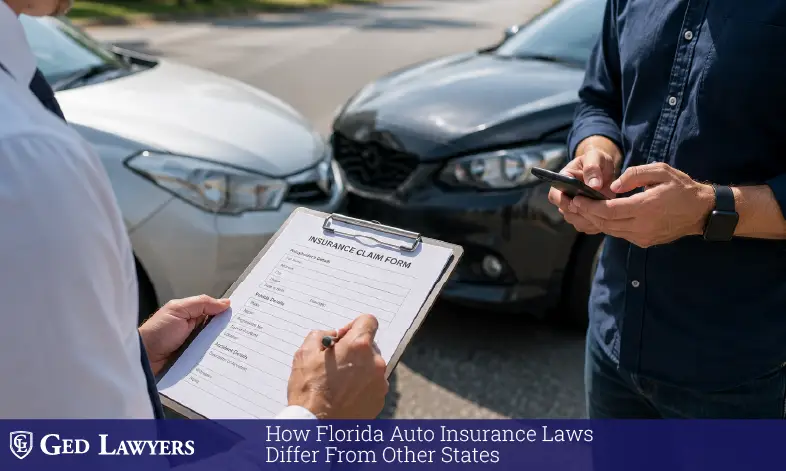
How Florida Auto Insurance Laws Differ From Other States

The car insurance industry in Florida works differently than in other states. Florida is a rare, no-fault state. What that means for drivers is that their own Florida car insurance pays for their injuries. They can’t jump to a third-party claim or a lawsuit based on bodily injuries.

For medical providers, patients who are car accident victims go through first-party claims. You’ll bill the victim’s health and auto insurance providers. Fingers crossed—the insurance companies will pay quickly. But we know you might run into trouble recovering compensation. When your bill is wrapped up in a car accident case, contact Ged Lawyers for help.

Auto Insurance Laws

Florida Auto Insurance Laws

Insurance agent explaining auto insurance laws to elderly person

No-fault insurance in Florida means drivers must have at least $10,000 in personal injury protection (PIP) insurance and $10,000 in property damage liability insurance.

During a car accident PIP claim in Florida, the crash victim communicates with their insurer. The payout they receive is based on Florida law and the policy language. PIP covers 80% of all necessary and reasonable medical expenses and 60% of lost income up to $10,000. The insurer pays you directly for the care you provide while paying the victim for their lost wages.

There are benefits to going through a first-party claim instead of a third-party claim. Your patient has a direct contractual relationship with their insurance company. If the insurer doesn’t uphold the contract, the patient (and your practice) may have a claim for bad faith.

What Does PIP Cover?

PIP coverage is helpful. Neither you nor your patient have to worry about proving fault before an insurance company pays. The whole point of PIP insurance in Florida is that it covers medical expenses without worrying about who caused the crash.

But the PIP insurance system in Florida is far from perfect. Your patient’s PIP insurance covers some of your fees—not all. It explicitly pays up to 80% of reasonable and necessary medical expenses. The other 20% is the patient’s responsibility.

If your patient has health insurance, you can bill that provider, as well. Or the patient will have to go after the at-fault driver for more compensation.

There’s also the policy limit to consider. The $10,000 limit includes payments for your patient’s lost income, which reduces how much is slated for medical bills.

The Difference Between Fault and No-Fault Insurance Laws

When someone’s hurt in a crash, Florida personal injury law dictates they file a claim against their PIP insurance for help. That’s different than most other states, which have fault-based car insurance systems. A car crash victim pursues compensation through a third-party claim.

In fault-based states, the accident victim’s financial recovery depends on another person’s insurance policy. Motorists often have to carry a minimum of between $15,000 and $25,000 in bodily injury liability coverage.

You’ll notice most states require more bodily injury liability insurance than Florida’s PIP minimum. Unfortunately, Florida’s minimum requirement is fairly low, making it harder for medical providers like you to recover their costs fully. A driver accidents lawyer from our team can help you explore your options to recover the compensation you need.

Car Accident Lawsuits

Car accident victims often wonder when and how to file a lawsuit after a car accident. If your patient’s injuries lead to damages worth more than their insurance policy, they have the right to sue the at-fault driver. For example, serious injuries could easily lead to tens of thousands in medical bills. The at-fault driver is responsible for those. Your patient can also sue after suffering a serious, permanent injury.

In either of these situations, you’re probably owed compensation for the medical care you provided. There are ways to make sure you get paid. Talk with an experienced car accident lawyer at Ged Lawyers. We have years of experience helping medical providers recover expenses after handling a serious car accident case.

Another situation where you’re left waiting for payment is if the patient’s insurance company wrongfully denies their no-fault accident claim or refuses to pay your invoices. Sometimes insurers have valid reasons for denials, but more often than not; the insurance company is hoping to save some money.

Most likely, you had your patient sign an Assignment of Benefits (AOB). If you haven’t yet, talk with Ged Lawyers about this. An AOB is crucial if you need to take matters into your own hands.

Through an AOB, you have the same rights the patient has concerning their insurance coverage. Instead of waiting for your patient to file a lawsuit against their auto insurance provider, you can file a PIP suit.

What to Expect From PIP Insurance Providers

You wouldn’t be the first medical practice to have problems with a PIP insurance provider.

The insurance company might:

  • Fully deny your patient’s claim
  • Approve the patient’s claim but refuse to pay all or specific medical bills
  • Deny one or more invoices by claiming a treatment wasn’t reasonable and necessary
  • Unreasonably delay payment
  • Try to negotiate the bills down

When an auto insurance company gives your practice trouble, call GED Lawyer for help. We’re highly experienced PIP lawyers who represent both car accident victims and medical providers. We can begin by reviewing your billing records related to your patient’s case. There may be minor issues to correct before an insurer pays.

Most importantly, we can gauge your likelihood of success. We evaluate why the insurer is denying your invoices and whether or not we can correct or appeal the issue. When necessary, we can represent you in a PIP suit.

Call Our Florida PIP Lawyers Today

Caring for patients injured in car accidents can be challenging. But at the end of the day, you give them the best care possible without regard for the cost. You should be able to rely on the insurance system. When that doesn’t happen, reach out to Ged Lawyers to discuss your options.

We have offices throughout Florida. Our headquarters is in Boca Raton, and you can reach us at 561-995-1966 or through our online form.

By : Clarissa Romero

July 19, 2021

Commercial Truck Accident Causes Guide

Common Causes of Commercial Truck Accidents

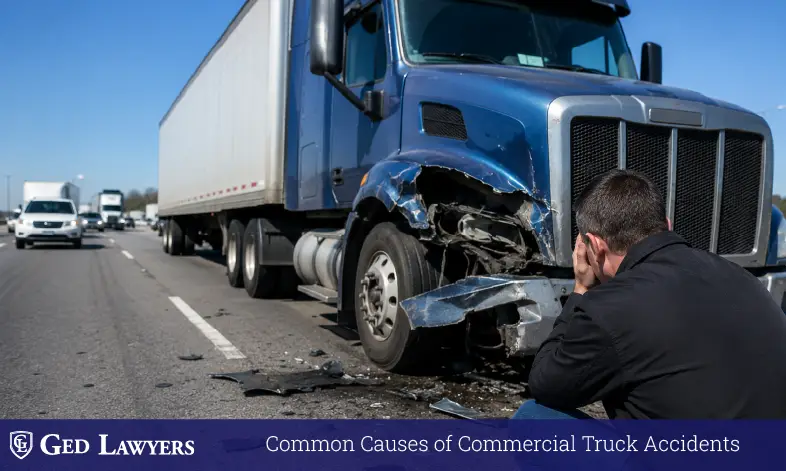
According to the National Highway Traffic Safety Administration, 4,951 people died in commercial truck accidents in 2018. Because commercial trucks are so large, they can do a significant amount of damage when they crash, and when someone dies, it’s usually not the truck driver. Only 18% of commercial truck accident deaths were commercial truck drivers. The remaining 82% of fatalities involved other people, with 71% being drivers and passengers in other vehicles and 11% being non-occupants, such as pedestrians.

Commercial truck accidents are dangerous, especially for passenger vehicle occupants involved in them. Learn more about some of the causes of commercial truck accidents and how personal injury lawyers in Boca Raton can help make your family whole again after an accident.

White commercial trucks

What Is a Commercial Truck?

There are many nicknames for commercial trucks: big rigs, 18-wheelers, semi-trucks, and tractor trailers. To be considered a commercial vehicle, the vehicle must be used for commercial purposes. While commercial trucks are often registered to businesses, individuals can own these big rigs as well. This means garbage trucks, dump trucks, box trucks, tankers, and other large vehicles are considered commercial trucks by law.

Why Do Commercial Trucks Crash?

The Federal Motor Carrier Safety Administration (FMCSA) conducted a comprehensive study attempting to determine the reasons behind commercial truck accidents. The FMCSA’s Large Truck Crash Causation Study (LTCCS) aimed to clarify the causes of these types of crashes, with the goal of minimizing the number of accidents.

Commercial Vehicle Accident Statistics

The LTCCS spanned almost three years and evaluated approximately 141,000 crashes involving trucks with a gross vehicle weight rating of more than 10,000 pounds that led to injuries or fatalities. The study found that 87% of commercial truck crashes causing injury or death were due to critical driver error, either by the truck driver or another driver, and that over half of the accidents involved a big rig colliding with a passenger vehicle, such as a sedan, pickup, or sport utility vehicle.

Driver Fatigue

Some of the most common causes of driver error found in the LTCCS involved fatigue. Even though the FMCSA has strict guidelines for how many hours and days in a row a truck driver can be behind the wheel, the pressure to deliver on time is high. Sleep deprivation can not only result in an inattentive driver not recognizing road hazards, but in the worst case, can lead to a driver falling asleep on the road.

Fatigue and/or inattention were reported in 22% of the accidents studied in the LTCCS. Another 10% of crashes involved drivers who “felt under work pressure” from their employer.

Drug Abuse or Habit

A driver falling asleep behind the wheel isn’t the only problem stemming from chronically sleep-deprived truckers. While drug or alcohol use was only reported in 3% of the crashes during the LTCCS study period, the LTCCS found over-the-counter drug use to be a critical factor in an alarming 17% of injury or fatal commercial truck accidents. Some commercial truck drivers use stimulants like ephedrine found in common weight loss medications to help them stay awake on the road. The driver may have become overstimulated, leading to distraction, an inability to focus on the road ahead, or even heart attacks.

Insufficient Driver Training

Semi-trucks are large, complicated pieces of machinery. Operating one requires rigorous training and licensing. Companies are responsible for ensuring their drivers receive adequate training to handle a commercial truck and avoid causing harm on the road.

Despite the seriousness of this responsibility, drivers may continue to display poor training behaviors on highways across the country. Speeding is prevalent, with 23% of accidents investigated in the LTCCS citing negligent speed as a cause. Other training problems led to 41% of commercial truck injury accidents, such as being underprepared for the roadways, following other vehicles too closely, and not frequently checking their surroundings.

Improper Semi-Truck Maintenance

Even when drivers have adequate training and rest and they’re drug and alcohol-free and paying attention, truck accidents can still occur. Shoddy or improper maintenance of trucks was identified as a direct cause of at least 10% of the injury crashes covered in the LTCCS. Trucking companies often attempt to minimize costs, which can mean cutting corners when maintaining their fleet. Severely worn tires or old, ineffective brakes on a semi-truck can pose a serious threat to other drivers on the highway.

Why You Need a Personal Injury Attorney After a Commercial Truck Accident

If you or your family members are unfortunate enough to be caught in a semi-truck crash, you should contact a commercial truck accident attorney as soon as possible. Insurance companies (including your own provider!) will try to pay you as little as possible for your claim, so you need an experienced professional fighting for you to get the full compensation you’re warranted.

Insurance issues are even more complicated in semi-truck accidents because it’s more difficult to determine whose insurance should pay for damages and medical bills. Trucking companies that conduct interstate commerce are required to carry large insurance policies under the Motor Carrier Act. When facing substantial exposure, insurance companies for truckers send their best attorneys to try to pay you as little as possible. For this reason, it’s crucial that you retain a personal injury attorney with experience in successfully handling commercial truck accident cases.

To protect your right to receive compensation, you need your own experienced and talented legal team on your side. The professional Florida truck accident lawyers at Ged Lawyers can fight for the compensation you deserve.

Dealing with a commercial truck accident can be a challenge, and you probably have many questions. Our skilled attorneys are knowledgeable in Florida law and known for their success in securing compensation for truck crash victims. To meet with a member of our team, contact our office at 844-443-3529 or online to schedule a free consultation to review and discuss your case.

By : Clarissa Romero

July 19, 2021

Prove Florida Slip Fall Case

What Do I Need To Prove a Slip and Fall Case in Florida?

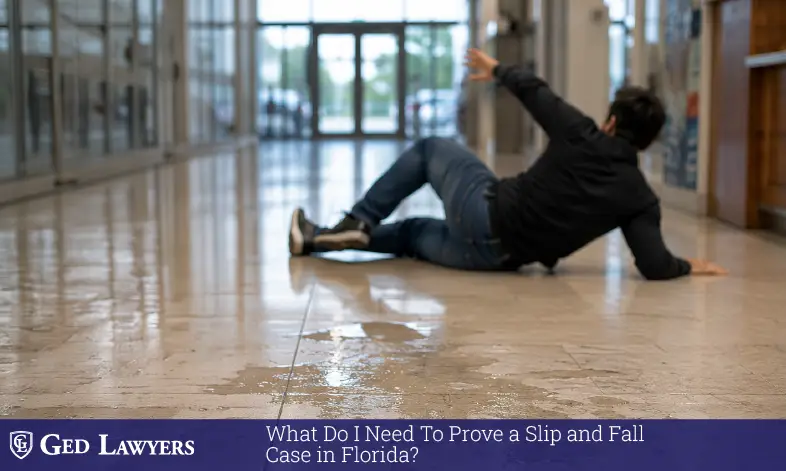
Slipping and falling down is a fact of life. The wisdom goes that it matters what you do once you get back up. However, what should you do if that stumble leads to severe injuries? And how do you know who is responsible for your fall?

Slip and fall accidents can end up causing serious harm, pain, and medical bills. In some cases, you may need to miss work or seek physical therapy and rehab. Fortunately, if you slip and fall on someone else’s property in Florida, you can seek reimbursement for your injuries by suing the responsible property owner.

Wet floor caution sign

Introduction to Slip and Fall Liability

Wet floor caution sign in store

Because Florida property owners are responsible for maintaining reasonably safe premises, they can be liable if your fall was caused by the owner’s negligence. Florida’s slip and fall statutes are also known as “premise liability laws,” as property owners have a duty to keep their premises free from obvious or known hazards. If you can prove that your fall was partially caused by a property owner breaching their duty, the owner may owe you reimbursement for your injuries.

Typically, property owners direct you to their insurance company to cover your losses. However, insurance companies are notorious for attempting to pay less than what you’re truly owed. You should seek a Florida slip and fall injury lawyer to ensure those responsible for your injuries pay what you are due.

Proving Premises Liability in Florida

To recover damages after a slip and fall, you need to prove that your tumble was caused by the property owner’s negligence. The owner isn’t liable for any accident that occurs on their property, only those they should have been able to prevent. There are two main theories in Florida for how to prove a slip and fall case against a property owner responsible for your injuries.

Owner Knew or Should Have Known About the Condition

The first theory of premise liability, or slip and fall negligence, requires you to show that the property owner should have been aware of the danger that led to your fall. Once they’re aware or should have known about the condition, the owner has a duty to correct the hazard and ensure the safety of their premises.

Often, a slip and fall occurs on a commercial property with multiple employees, such as a grocery store or restaurant. If you can prove that an employee should have been aware of a condition that presented a danger, you can hold the employer liable for your fall.

In a restaurant, water or other drinks can spill onto common-area floors. A customer walking over this wet spot is in danger of a fall, which is why you often see “Caution Wet Floor” signs. However, if you slip and fall on a wet spot in a restaurant, whether the business is responsible under premises liability laws depends on the facts of the fall.

To be liable, an employee would need to have known the wet spot on their floor was dangerous. The danger of a wet floor is obvious, but other conditions that could cause a tumble may not be so clear. Once it’s established that an employee could reasonably understand the danger, their actions determine negligence.

If a property owner or employee didn’t have sufficient time to correct or repair the hazard before a fall, it would be tough to hold them responsible. The negligence stems from their response. In the wet floor example, if the spill occurred mere seconds before you slipped, the business is likely not negligent. They didn’t have an opportunity to correct the condition. However, if the spill was on the floor for minutes or another customer alerted an employee of the wet floor and that person ignored the information, then the business can be held responsible if its employees didn’t take steps to avoid danger.

Owner Caused the Condition and Failed to Correct

The second theory of premises liability deals with the property owner or their representative’s actions directly. If the owner or their employees were responsible for creating the condition themselves and didn’t take steps to correct the danger, they could be held liable for their negligence.

Returning to the example of a restaurant’s wet floor, consider if it was an employee of the restaurant themselves who spilled water during regular business hours. In this situation, the employee created the danger and is clearly aware of the hazard it presents to customers and other employees. Therefore, the employee needs to remedy the condition as soon as they can. This would mean placing the “Caution Wet Floor” sign over the spill immediately while mopping up.

Damages Available in Premise Liability Cases

If you’re hurt in a slip and fall in Florida, proving the property owner is liable is the first step in recovering what you’re owed. Next, you need to determine what injuries you’ve suffered to calculate damages.

A typical Florida slip and fall settlement can include:

  • Reimbursement for medical expenses, such as hospital bills, ambulance costs, physical therapy, and rehabilitation programs
  • Economic damages, such as lost wages and lost employment opportunities
  • Noneconomic damages, such as pain and suffering, mental anguish, and inconvenience

What damages are available to you depend on your case’s facts, but a personal injury lawyer can help you secure the maximum amount you’re owed.

Pure Comparative Negligence

Under Florida law, your compensation can be reduced if you were partially at fault for the accident. For example, if you’re found to be 25% responsible for your fall while the property owner is 75% at fault, your total damages will be reduced by 25%. This system of allotting fault is called pure comparative negligence.

Personal injury law, premises liability, and comparative negligence are complicated legal concepts and you don’t want to try to navigate them on your own. An experienced slip and fall attorney can determine the extent of your damages, negotiate with insurance companies, and identify the parties at fault for your injuries. At Ged Lawyers, our Florida slip and fall attorneys can help you receive compensation for injuries caused by a property owner’s negligence. To meet with a team member, contact our office at 844-443-3529 or online to schedule a free consultation to review your case.

By : Clarissa Romero

July 6, 2021

Understanding Commercial Property Insurance Coverage

Understanding What Your Commercial Property Insurance Covers

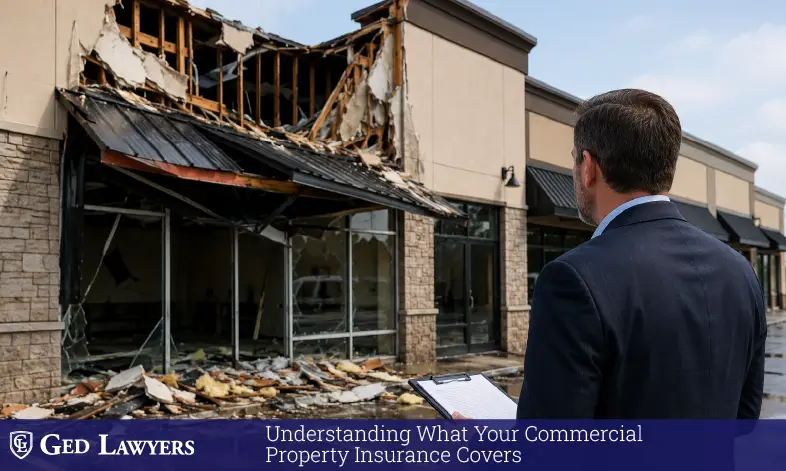
The property where you conduct business is a valuable asset. Like residential real estate properties, commercial properties can appreciate over time and bring revenue to your business. Unlike residential real estate; commercial property exposes to you more liability and risk.

It’s important not only to understand what your commercial property insurance covers, but also to know how much and what kind of commercial property insurance coverage you need. This quick guide will get you started.

Commercial Property

Why Do You Need Commercial Property Insurance?

Commercial property insurance

For one thing, if you own the property, having the proper insurance may be a mandate by your lender. If so, you’ll need to purchase a policy that includes the required coverage.

Aside from that, commercial property insurance protects your structures, inventory, equipment, and supplies from theft and damage. If the property where you conduct business is essential to operations, or if the property itself is the business, you need commercial property insurance.

What Does Commercial Property Insurance Cover?

This insurance covers loss or damage to commercial property—that is, the buildings and structures where you conduct business. It protects the items housed within them, including inventory, equipment, furniture, and supplies. It also provides theft coverage and the cost of replacing (or repairing) damage to commercial property.

In some cases, commercial property insurance also covers the lost income you experience as a result of property damage or provides coverage to temporarily move your business into a habitable structure. Some policies also provide liability insurance.

There are three main types of commercial property insurance policies, as follows:

Stand-Alone or Basic Form Policy

This type of insurance policy covers losses that result from natural events like fires, windstorms, hail, explosions, and lightning.

Commercial Package Policy (CPP)

Sometimes called a “special forms” policy, this type of commercial property insurance provides higher levels of coverage, specifically tailored to meet your business’s needs. A CPP allows you to add certain exclusions that aren’t covered under Florida law.

Here are some of the more common exclusions in the state of Florida:

  • Ordinance or Law Coverage – This protects you from loss resulting from local and state ordinances.
  • Flood Coverage – Because the National Flood Insurance Program covers most insurance in high-risk zones, an insurance provider may only offer supplemental flood insurance.
  • Earthquake and Volcanic Eruption Coverage – These endorsements provide the business structures with coverage in the event of earthquakes and volcanic eruptions.
  • Manufacturer’s Consequential Loss Assumption -This endorsement covers reduction in value to undamaged inventory due to the physical loss of other property.
  • Spoilage Coverage – This covers damage to perishable stock in the event of a power outage or other breakdown of the refrigeration system or cooling and humidity control equipment at your commercial property.
  • Utility Services Endorsement -This provides coverage in case of power interruption, but the cause of the interruption must be covered in the CPP.

Business Owner’s Policy

business owner’s policy combines property and liability coverage. It’s the policy you’ll need if you’re running a retail business or own an apartment complex—anyplace where individuals other than your employees may suffer injuries at your place of business.

What Doesn’t Commercial Property Insurance Cover?

Generally, this insurance only covers theft, damage, and destruction involving structures and equipment. It doesn’t cover land, vehicles requiring auto registration, landscaping, and cash kept on the premises.

Basic form policies and CPPs don’t protect business owners from personal liability claims. You’ll only receive that level of coverage with a business owner’s policy. Moreover, if you have a CPP, you’ll receive coverage for only those exclusions that you select.

What’s the Cost of Commercial Property Insurance?

The average business pays somewhere between $1,000 and $3,000 per million dollars of commercial property insurance coverage. The average cost of annual coverage nationwide is $742.

There are many variables in the cost of a commercial property policy. A commercial package policy is more expensive than a Basic form policy simply because it covers exclusions. You’ll also pay more for commercial property insurance if you’re operating a business in certain areas or working with hazardous materials.

The amount of coverage is also an important factor in cost. Are you seeking replacement value for destroyed or stolen equipment? That will cost more than actual cash value coverage.

What Can You Do To Avoid Filing a Claim?

The most important thing that you can do to avoid filing a claim is to be proactive. Improving the safety of your premises, installing good security, and performing regular maintenance can all reduce the need to file a claim.

How Do You File a Commercial Property Insurance Claim?

In the state of Florida, you have two years from the time of the incident to file a commercial property insurance claim. If the insurer acts in bad faith and denies a valid claim, you’re allowed five years from the bad faith incident to file.

It’s common for an insurance adjuster to ask for a recorded statement, but in some cases, they can use this to deny a claim. If you feel unsure of what to do, it’s best to consult with a property attorney. In some cases, employing both a public adjuster and a property damage lawyer can be beneficial. For instance, a public adjuster can handle the initial claim preparation and negotiation, while an attorney can step in if legal issues arise or if the claim escalates to litigation. However, be mindful that hiring both may result in higher combined fees.

Once you file the claim, the insurance company must acknowledge receipt within 14 days. They’ll provide you with a list of items you need to validate the claim, along with instructions for filling out the claim forms, at this time.

The insurer must reach a decision about whether to accept your claim within 90 days. Once you have come to a settlement, they have 20 days to issue the first payment.

When to Contact a Lawyer

Are you confused about the commercial property insurance claims process? Has your insurer rejected one of your commercial property damage claims? Do you feel that your insurance company is acting in bad faith?

There’s nothing worse than getting the runaround when your bottom line is at stake. Ged Lawyers has a dedicated team of property lawyers who can help you navigate the complex world of claims disputes and help you reach a settlement. Contact us online to schedule a free case review, or give us a call at 561-995-1966 or toll-free at 844-443-3529.

By : Clarissa Romero

July 6, 2021

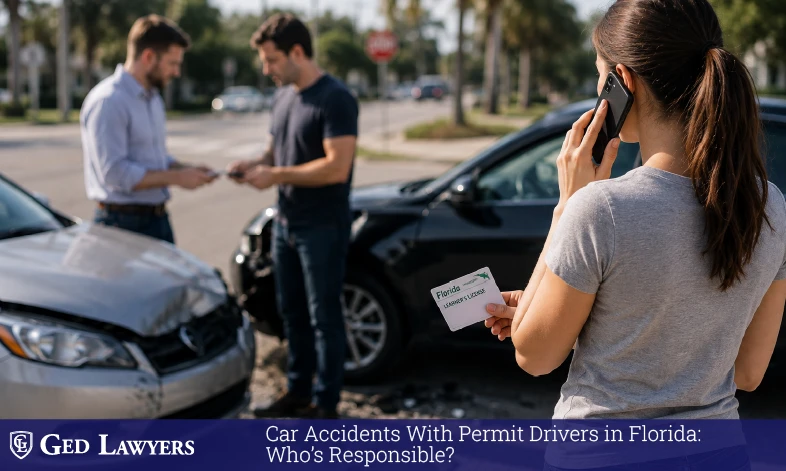
Car Accidents With Permit Drivers in Florida: Who’s Responsible?

Permit and young drivers are inexperienced on the road, which can lead to serious consequences in the event of a crash. While you may take extra precautions to protect yourself and your own passengers, you can’t prevent the negligent actions of others. So what happens when a permit driver causes an accident? Below we discuss Florida law as it relates to permit and youthful drivers, liability in these situations, and next steps to give you information about how to handle a crash caused by a permit driver.

Florida Laws Related to Permit and Young Drivers

Florida’s laws require a young driver to first obtain a learner’s permit if they meet certain qualifications. An individual must be at least 15 years old to get a learner’s permit and they must pass a written examination. With a learner’s permit, a youthful driver must adhere to certain strict rules. First, they must have a licensed driver who is at least 21 years old with them at all times as a front-seat passenger while operating a vehicle. Next, for the first three months after obtaining a permit, they can only operate a motor vehicle during daylight hours. After that, they can only operate a motor vehicle until 10:00 pm.After a young driver holds a learner’s permit for one year (regardless of the date when they obtained their learner’s permit), they become eligible to obtain a full operator’s license. At the earliest, a youthful driver who obtained a learner’s permit on their 15th birthday would be eligible to obtain a full operator’s license on their 16th birthday. With an operator’s license, these young drivers can operate motor vehicles with no restrictions of being accompanied by more experienced drivers at any time of day or night.For one of these youthful drivers to obtain either a learner or operator’s license, a parent must cosign the application for the license. Although most parents don’t realize it, by cosigning the application, they agree to be legally liable for any accident that the minor driver causes pursuant to Florida Statutes. This continues until the young driver turns 18.One additional way that others may be responsible for the negligent operation of a motor vehicle by a youthful driver is by virtue of ownership of a motor vehicle. In Florida, and absent some very rare exceptions, a person under 18 cannot legally own or register a motor vehicle. Accordingly, any motor vehicle owner on the roadways must be more than 18 years old. Any motor vehicle owner who allows another to operate their motor vehicle with their knowledge and consent is liable for the negligence of their permissive operator, even if the owner has no fault of their own. This is known as vicarious liability pursuant to Florida’s Dangerous Instrumentality Doctrine. Also, this same rule applies even when the permissive driver is over the age of 18.

Common Reasons Permit Drivers and Young Drivers Get Into Accidents

Young drivers and permit drivers are two different groups that often overlap, but not all permit drivers are young drivers and not all young drivers are permit drivers. While these two groups may share in a general lack of experience when it comes to driving, there are other factors that may also influence their behavior on the road.

Young drivers who have their permits are more likely to engage in reckless behavior given their age and social environments, whereas a permit driver who’s not a teen may be inexperienced but still refrain from engaging in the same reckless behavior.

Keeping this nuance in mind, some common reasons why inexperienced drivers get into accidents include:

  • Distracted driving. Distracted driving is a growing problem among all groups of drivers since the advent of cell phones and other handheld devices. Inexperienced drivers on the road are even more prone to causing an accident while using a device behind the wheel.
  • Speeding. As young, inexperienced, and permit drivers become more comfortable behind the wheel, they may feel tempted to drive at higher speeds, especially in familiar areas. While the goal of permit driving is to get more comfortable operating a vehicle, this boost in confidence may not be as warranted as new drivers may believe it to be. Since driving at quicker speeds limits a person’s time to respond to sudden stops, changes in traffic, roadway debris, or emergencies, the likelihood that these inexperienced drivers may cause a crash increases.
  • Drunk driving. Drunk driving is dangerous, as an individual’s motor functions and powers of decision-making are significantly impaired while under the influence of alcohol. Young drivers are more likely to engage in drunk driving as a result of social pressures and environments, thus increasing their odds of causing an accident.
  • Social influences. Another common cause of accidents among inexperienced drivers involves social influences. A Kansas City University study found that male teen drivers are more likely than their female counterparts to speed, drive while under the influence of alcohol, engage in reckless driving, cause felony crashes (hit-and-run, vehicular manslaughter), and fatally injure themselves or others in accidents. Female teen drivers are more likely to be involved in accidents at intersections and with pedestrians, as well as drive with restricted licenses.

Who’s Liable If a Young Driver or Permit Driver Causes an Accident?

Drivers 18 or older don’t need a parent or guardian to sign off on their driving application, which means liability for accidents usually falls on the permit driver. This means that permit drivers who are not teens or who don’t require a parent or guardian to sign onto their driving application are typically found fully responsible for their own actions when behind the wheel. However, if an individual allows a permit driver to use a vehicle registered in their name, this person may be held liable for an accident caused by the permit driver if that vehicle is involved.

If a young driver causes an accident, their parent or guardian may be held liable for the incident, depending on certain factors. The first thing considered is the permit driver’s age. If they’re under 18, the adult who signed off on their driving permit application may be held partially liable for the accident, in addition to the young driver.

A permit driver may be held fully liable for an accident they caused even if they were following all the rules associated with Florida’s permit laws. This means that a permit driver may still be found negligent in causing an accident even if they were driving within the allotted time frames outlined by Florida’s laws and with an appropriate supervisor in the passenger seat.

If a parent or guardian allowed a permit or young driver to operate their vehicle unsupervised, they may be held fully liable for an accident the driver caused. This is because signing off on the permit driver’s application also meant ensuring the youthful driver would abide by Florida’s laws concerning supervision of the permit driver. Alternatively, if the parent or guardian didn’t know the permit driver was using their vehicle at the time of the accident, this person may not be held fully or even partially liable for the incident.

For both young drivers and inexperienced permit drivers, the use of a vehicle doesn’t necessarily require formal expression or written consent. The court may rule that the frequent use of the vehicle by an individual, or an individual living in the same household as the registered vehicle’s owner, may be enough to constitute consent to that vehicle’s use by the young driver or permit driver.

Insurance Claims Process When a Permit Driver Is Behind the Wheel During an Accident

When a permit or youthful driver causes an accident in Florida, you may wonder whether the incident will be handled differently than other types of accidents. Generally, this isn’t the case. The biggest difference to expect from a permit driver accident is the involvement of a parent or guardian and their liability for the accident. This means the youthful driver assumes all liability or partial liability shared with their parent or guardian, or the parent or guardian takes full liability for the accident. Regardless, the case will largely be handled like any other accident.

It’s important to understand that Florida is a no-fault state. This means that drivers in the state must carry personal injury protection (PIP) coverage, which covers the driver up to $10,000 for personal injuries and up to $10,000 in property damage, as well as some coverage for children or passengers. This means that fault rarely comes into play for minor accidents.

A youthful or permit driver who causes an accident that results in serious, permanent, or fatal injuries may be sued if the injured party’s PIP insurance doesn’t cover the full cost of their injuries. While fault is considered in these cases, the fact that a youthful or permit driver was involved doesn’t change much; parties who are at fault can be sued for their actions.

Have You Been in an Accident With a Permit Driver? Contact Ged Lawyers to Discuss Your Case

If you were involved in an accident caused by a permit driver, contact Ged Lawyers to learn more about Florida’s driving and insurance laws. We can discuss the details of your case in a free initial consultation.

By : Clarissa Romero

July 6, 2021

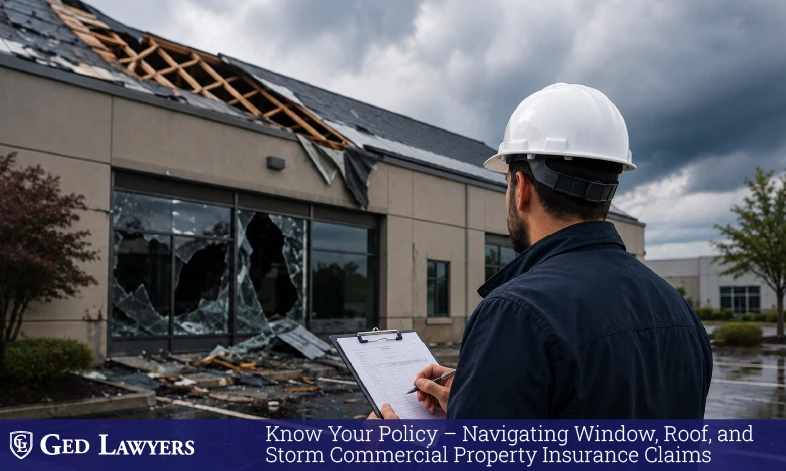
Know Your Policy – Navigating Window, Roof, and Storm Commercial Property Insurance Claims

Spring is a busy time for commercial property insurance claims. As a business owner, a sudden storm can throw a wrench into your day-to-day operations. Knowing what is in your policy and the commercial property insurance claims process is essential if you have to submit a window, roof, or storm damage commercial insurance claim.

What Commercial Property Insurance Covers

You can purchase commercial property insurance separately or as part of a larger general business liability bundle. Commercial property insurance aims to compensate businesses for physical damage to their assets from storms, fires, and theft.

But what does commercial property insurance cover? Generally, your policy won’t cover some natural disasters such as floods, earthquakes, or hurricanes. Depending on your circumstances, you can add these coverages as riders to your commercial insurance policy.

It’s not just buildings and other structures that are typically covered by commercial property insurance. Other assets, such as equipment, vehicles, and fixtures, fall under a standard policy. Some policies also include a lost income provision to cover a temporary shutdown.

Though commercial property insurance can be expensive, the premiums your company pays usually are tax deductible. Once your policy is in place, it’s vital that you know how to submit a claim to your insurer.

How To Submit a Claim – Steps and Best Practices

One thing that always makes a claim submission smoother is organization. Know who your insurance company—and possibly even your agent—is and have their contact information readily available. Make sure you have your policy documents filed in a convenient location. If your insurer offers a mobile app, having it preinstalled on your phone can expedite the claims process.

Move Quickly

Speed is necessary because contacting your insurer as soon as possible is critical. After a natural disaster, insurance companies may be dealing with a surge of claims. The sooner you let them know something has gone wrong, they can begin assigning your case an adjuster.

Document Damage

Before an adjuster can reach your location, you need to document the damage yourself. Take pictures before, during, and after an initial cleanup. You can use the photographs to show the adjuster and their claims supervisors the damage you’re dealing with.

Keep Materials

During cleanup, be careful what property you discard. While local health regulations may require you to pitch items after a period of time, insurance companies typically want to examine the damage themselves. Unless you are ordered to get rid of material, hold on to and securely store what you can.

Take Notes

When your business is dealing with window, roof, or storm damage, your schedule will be chaotic. A claims diary is a critical tool for aiding your memory of what you lost or what you can salvage. It’s also helpful to record every insurance interaction, including who you spoke to, when, and what about.

Window Damage Claims

One category of commercial property coverage focuses on windows. Commercial window damage from vandalism, theft, or storms usually requires an insurance company to pay your claim.

However, insurance companies always attempt to either avoid paying altogether or at least minimize the payout. When it comes to commercial windows, a common tactic is to declare any damage was “not storm-related.” Every other building in your area may get replacement windows, but your windows do not qualify due to some supposed manufacturing defect or maintenance issue.

Another important note about commercial window coverage is that insurance companies usually have emergency repair companies on retainer. It’s in everyone’s interest that any broken windows do not lead to additional damage, such as flooding or theft. Your company may be able to dispatch professionals to temporarily board up or replace destroyed windows.

Roof Damage Claims

Similar to windows, commercial roof damage is generally covered by your insurance policy. There can be substantial differences between policies in how insurance companies treat roof damage.

One particular provision to look for in your company’s commercial property insurance policy is how roof damage is assessed. Some policies cover replacement value, but others cap your recovery at the value of the roof before it was damaged. For older roofs especially, the way your policy calculates payouts can greatly impact the amount you receive.

As with damaged windows, if your business suffers roof damage, you should seek expedited professional repairs. A damaged roof can lead to further structural damage, flooding, mold, or other hazards if not quickly mitigated. Be particularly wary after hailstorms. Hail can damage roofs in ways that are nearly invisible to the untrained eye. It’s always best to have a professional examine roofs that were exposed to hail.

Storm Damage Claims

Commercial storm damage coverage can depend on the type of natural disaster. While lightning, wind, hail, and harm caused by fallen trees or thrown debris usually fall under a commercial insurance policy, flood damage almost always requires your policy to have a separate rider for coverage to kick in.

More localized disasters, such as earthquakes and hurricanes, also require a separate rider to your policy. Whether or not you choose to pay the increased premiums for these additions is a matter of risk management.

Beyond window, roof, or other structural claims, your vehicle fleet may be impacted by a storm. Downed power lines can cause power fluctuations that destroy your servers or other valuable electronics. Sometimes, expensive signage will be torn away in strong winds. Commercial storm damage coverage should kick in to help make your business whole again.

When to Contact a Lawyer

Even though you have insurance to protect you in the worst-case scenario, it’s important to remember that insurance companies are not on your side. Your insurance provider is a business with a bottom line that relies on paying claimants the smallest amount they can get away with. After a commercial property damage claim, your insurance company typically offers you a lowball settlement.

But that first offer is never the best outcome for your business. A commercial property attorney can handle insurance negotiations while you deal with all the other fallouts. Contact Ged Lawyers as soon as you know you need to submit a commercial insurance claim.

A standard best practice is to never accept a commercial property insurance settlement without speaking with a lawyer. Our attorneys can provide experienced advice at every stage of the claims process. We can assist in maximizing your insurance settlement while minimizing hassle.

By : Clarissa Romero

June 22, 2021

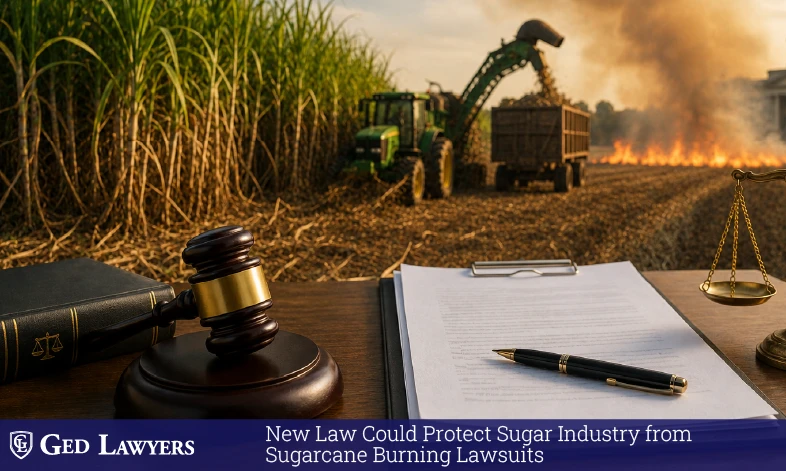
New Law Could Protect Sugar Industry from Sugarcane Burning Lawsuits

A recently enacted FL law could thwart a class action lawsuit by Glades residents whose health and finances have suffered due to widespread burning of sugarcane in western Palm Beach County.

The sweetness of sugar is found among the fibers of the inner stalks of the sugarcane plant. Part of the process of harvesting sugarcane involves removing the leafy outer stalks of the plant, leaving the soft, inner stalks, which are then cut down and processed. The fastest way to get rid of the outer stalk is to set the sugarcane field on fire which sends air pollution, in the form of smoke, into the surrounding area. A slower, and therefore more expensive method is to cut off the outer stalks by hand or by machine, but this method, called “green harvesting,” causes little or no pollution. Major sugar-producing countries such as Brazil and Thailand have laws banning sugarcane burning, and have therefore switched to green harvesting, but sugarcane burning remains widespread in Florida, largely due to the powerful sugarcane industry lobby. Glades residents whose health has been harmed and whose property values have declined due to the pollution have filed a class action lawsuit against Florida’s biggest sugar producers, but the newly enacted Right to Farm Act may deal a blow to their efforts to collect damages. If you have suffered an illness related to industrial pollution near your place of residence, contact a Boca Raton product liability lawyer.

The Right to Farm Act is Bad News for Glades Residents

Sugarcane burning is responsible for high levels of air pollution in the residential areas of the Glades region in western Palm Beach County, at the northern edge of the Everglades. This pollution has caused high incidences of asthma and other smoke exposure-related illnesses among the residents of the area, most of whom are Black or Latino, and has caused property values in the area to decline.

More than 30,000 residents of the area have filed a class action lawsuit against the sugar companies responsible for the burning. Meanwhile, in April 2021, Florida Governor Ron DeSantis signed into law a bill protecting certain agricultural activities, including “particle emissions,” a euphemism for agricultural burning. The new law, called the Right to Farm Act, also limits the damages plaintiffs can receive in pollution-related lawsuits to the amount of depreciation in property values resulting from the pollution. Since property values in the neighborhoods near the sugarcane fields were already low due to redlining policies from decades ago, the amount that plaintiffs will be able to recover may not be enough to pay their pollution-related medical bills and compensate for their financial losses, but the plaintiffs and their mass tort lawyers are still seeking justice.

Contact Ged Lawyers About Illnesses Related to Industrial Pollution in FL

If environmental pollution from industrial activities near your home has harmed your health, a mass torts lawyer can help. Contact Ged Lawyers in Boca Raton, Florida to discuss your case.

By : Clarissa Romero

June 22, 2021

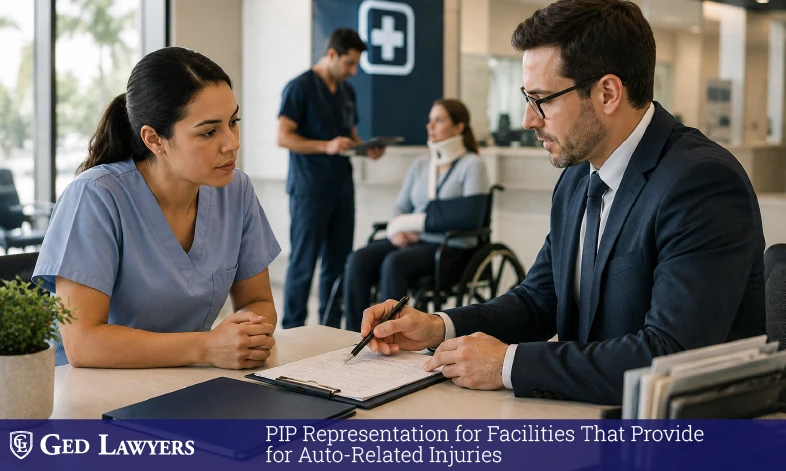
PIP Representation for Facilities That Provide for Auto-Related Injuries

Florida is one of only 12 states in the U.S. to have no-fault auto insurance. Rather than use personal injury law to determine which party is negligent, injured parties file a claim against the insurance company to receive compensation for lost wages, medical bills, and hospitalization.

PIP law in Florida mandates that motorists pay $10,000 in first-party personal injury protection coverage. While there are special cases where injured parties may sue for additional damages, the law is designed so that insurance companies can pay out these basic, no-fault claims simply, without litigation. In fact, the law allows injured parties to sign over their medical bills so that medical providers can collect directly from the insurance company. What could be easier?

Unfortunately, insurance companies don’t always comply. When they refuse to pay healthcare providers for services rendered after an auto accident, Ged Lawyers can help. We specialize in providing PIP representation to medical providers and the facilities where they treat patients, ensuring that our clients receive the compensation they deserve.

PIP Representation for Facilities That Provide for Auto-Related Injuries

What Types of Doctors Do Ged Lawyers Represent?

Florida Statute 627.736, section (5)(a) explains that the PIP insurer “may pay [medical expenses] directly to such person or institution lawfully rendering such treatment if the insured receiving such treatment or his or her guardian has countersigned the properly completed invoice, bill, or claim form approved by the office upon which such charges are to be paid for as having actually been rendered, to the best knowledge of the insured or his or her guardian.”

In other words, the law is set up so that insurance companies make direct payments to medical providers and facilities. PIP coverage pays for the following medical expenses:

  • Medical bills
  • Cost of surgery and hospitalization
  • Rehabilitation
  • Ambulance services
  • Prescription medicine

Thus, a broad range of doctors and other medical providers are “PIP doctors,” including:

  • General practitioners
  • Surgeons
  • Emergency medical staff
  • Dentists providing emergency care
  • Physical therapists and physiatrists
  • Hospitals
  • Rehabilitation clinics
  • Other medical clinics

If you’re a medical provider having difficulty recovering payment after providing treatment to an automobile accident victim, you’re entitled to seek representation under the law. Ged Lawyers works on a 100% contingency basis to get you the compensation you deserve.

What Happens if Payment Fails To Occur?

Florida Statute 627.736 establishes a clear timeline within which insurance companies must either pay up or reject either all or part of the claim. Section (4)(b) states that “Personal injury protection insurance benefits… are overdue if not paid within 30 days after the insurer is furnished written notice of the fact of a covered loss and of the amount of same.”

If the PIP insurer hasn’t paid the bill within that 30-day period, doctors and medical facilities can proceed with filing a lawsuit against the insurance company.

There are two possible types of nonpayment responses from the insurance company. First, the insurer may reject either an entire or a partial claim, in which case, it needs to provide itemized documentation.

Common reasons PIP insurers may reject a claim are as follows:

  • The claim was reduced due to an alleged usual and customary charge, i.e., they deemed the charge “unreasonable” under the law.
  • The claim was denied based on an independent medical examination cutoff.
  • The claim was denied for failure to appear at an examination under oath.
  • The claim was denied based on allegations of material misrepresentation.

The second type of nonpayment occurs when an insurer simply fails to respond to the claim within the specified time frame. If that happens, the insurance company may be guilty of acting in bad faith, subjecting itself to additional litigation and extra payments.

The Settlement Demand Letter

When the insurance company either denies a claim or makes a partial payment, you or your legal representative need to respond with a demand letter. This document claims that you’re entitled to more money than the insurance company initially offered. Writing a demand letter for settlement is a necessary step that you take before filing a court action, and it can serve as a pre-trial notice.

The settlement demand letter must be sent via certified mail to the special PIP demand address and drafted according to stipulations laid forth in Statute 627.736. The insurance company has 30 days from the date of receipt to respond to the demand. If it agrees to pay, the insurance company will also owe a statutory interest payment and a penalty of 10% above the outstanding amount.

Who Pays the Legal Fees?

Although Ged Lawyers accepts PIP representation cases on a 100% contingency basis, ultimately there is the question of who pays the fees pursuant to legal action. Fortunately, we make sure that insurance companies are responsible for the legal fees, even if we have to go back and do a five-year audit to check for discrepancies in the statutes of limitations.

Ged Lawyers Gets Results

Lawmakers designed personal injury protection in the Sunshine State to make it simple for injured motorists to receive swift benefits without needing to file a lawsuit. Whether or not a motorist is at fault, they’re entitled to receive up to $10,000 to help defray the cost of injuries and lost wages. Moreover, they are able to sign over the responsibility for collecting payment to their medical providers.

Unfortunately, the cost of convenience may translate into lost income for doctors and medical facilities if PIP insurers refuse to pay.

At Ged Lawyers, we are dedicated to providing PIP representation to medical providers—it’s what we do. Fully 85% of our legal team and support staff specialize in this area, and we have recovered millions of dollars in lost PIP payments for our healthcare provider and medical facility clients.

Headquartered in Boca Raton, Florida, Ged Lawyers has offices conveniently located throughout the Sunshine State, and we are ready to speak with you whenever you’re ready. We are always client-centric and have invested in proprietary technology that makes it easy for our clients to log into the portal and see the status of their case at a glance. Contact us toll-free at 844-443-3529 or locally at 561-995-1966 and let us know how we can help.

By : Clarissa Romero

June 22, 2021

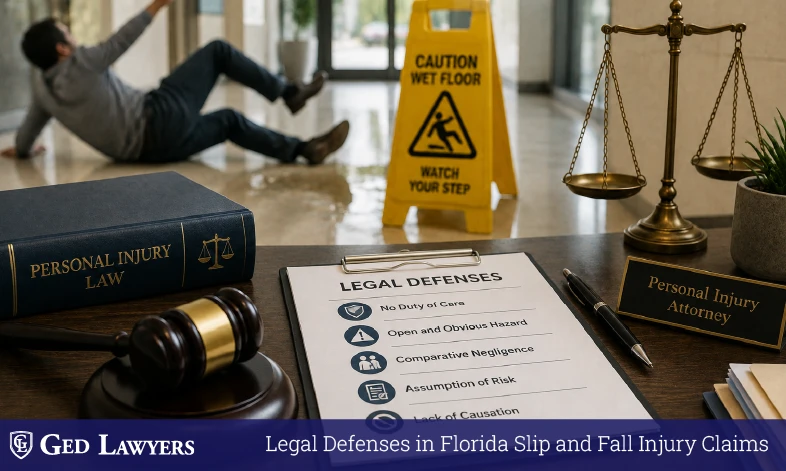
Legal Defenses in Florida Slip and Fall Injury Claims

If you’ve suffered an injury in a slip and fall accident on someone else’s property, you may be entitled to receive compensation if a dangerous condition on the property caused the fall. However, no matter how airtight you think your case is, the insurance company will do everything in its power to avoid giving you what you deserve. The most common application of this defense is liquid on the floor of a retail location. Just because there’s something on the floor, by itself, is not enough. A landowner isn’t liable if something spilled immediately before a fall, since the retailer had no opportunity to find and correct the condition.

There are many legal slip and fall defenses that property owners, insurance providers, and their lawyers can use to fight your claim. This means you need an experienced slip and fall attorney to help you contend with their arguments. Slip and fall cases are incredibly fact-specific, so it’s essential that you partner with an experienced professional to navigate the complex rules involved in this area of law.

Wet floor caution sign

1. The Situation Was Obvious to a Reasonable Person

slip and fall accident

One defense the insurance company may raise is that the dangerous situation that was responsible for your accident was “open and obvious.” This means that a reasonable person would have noticed the potential danger and avoided it.

Under Florida law, property owners have a responsibility to keep premises reasonably safe and must warn visitors of dangerous conditions that aren’t readily apparent. However, visitors also have a duty to recognize open and obvious dangers and take prudent steps to safeguard themselves from harm.

If you’re injured by open and obvious danger, the property owner may argue that they didn’t breach their duty to warn you about the condition, since a reasonable person would have noticed it. However, if the condition constituted a violation of the owner’s duty to use reasonable care in maintaining safe premises, you may be able to overcome this defense.

2. The Fall Was Your Fault, Not the Property Owner’s

Another common slip and fall defense that insurance companies rely on is arguing that the accident was your fault and therefore wasn’t caused by a dangerous condition on the property. For example, the property owner is typically not at fault if you trip and fall because of an untied shoe or intoxication caused you to trip over your own feet.

Additionally, under Florida’s comparative negligence law, the compensation you recover can be reduced by a percentage relative to the amount of blame you have in causing the accident. If you’re found to be 20% at fault for your injuries, you can only recover 80% of your damages from the property owner.

3. The Property Owner Wasn’t Aware of the Danger Prior to Your Accident

Insurance companies may also try to get out of paying for your injuries by arguing that the property owner didn’t know about the danger before your accident. Because property owners are generally only liable for injuries caused by dangerous conditions that the owner knew or should have known about, a common defense is to claim the owner wasn’t aware of the danger.

For property owners to be liable for injuries caused by dangerous conditions on their premises, they must have had prior knowledge about the danger before your accident. If they weren’t aware of the condition, they can still be liable if they should have known about the danger, but failed to reasonably inspect and/or maintain the premises.

4. You Were Clearly Aware of the Danger, but Assumed the Risk

Yet another argument that may be introduced in a slip and fall case is that you knew about the danger, but assumed the risk anyway. If you were aware of a hazardous condition, under the legal doctrine of “assumption of risk,” you might not be able to receive compensation for injuries you incurred by voluntarily exposing yourself to a known danger.

By using this argument, the defense can contend that you subjected yourself to an open and obvious risk or a danger the property owner warned you about, thereby accepting the possibility of injury by choosing to expose yourself to the hazard. In Florida, this defense doesn’t usually result in the injured person receiving no compensation at all. However, it’s often used to assign a more significant portion of the blame to the injured party, reducing the amount of money they receive from the property owner under Florida’s comparative fault laws.

5. The Property Owner Didn’t Have Control of the Situation, While You Did

Finally, let’s say you’re a tenant suing your landlord for an injury sustained on their rented property. In these types of cases, the insurance company almost certainly argues that the landlord can’t be responsible for the accident because you were in control of the property at the time you fell. This argument means, as the tenant, you had the right to control the property, and therefore, also had the duty to safely maintain the premises.

However, there are limits to this defense. For example, if the injury occurred in a common area or was caused by a known hazard that your landlord failed to repair, they can still be liable for their actions. The division of responsibilities between landlords and tenants is often murky, but an experienced Florida lawyer can help you determine whether your landlord breached a duty that contributed to your accident.

How a Personal Injury Attorney Can Help

If you’ve been involved in a slip and fall accident, the knowledgeable personal injury attorneys at Ged Lawyers can help you fight these defenses and hold the property owner accountable. The insurance company and its team of lawyers will focus all their efforts on wriggling out of paying you the compensation you’re owed. To get what you deserve, it’s vital that you have a slip and fall lawyer on your side who knows how to defeat their arguments.

At Ged Lawyers, our skillful personal injury attorneys have successfully represented Florida slip and fall victims since 1995 and are known for winning fair compensation for our clients. Our team is ready and eager to answer your questions and advise you of your legal rights. Contact our office at 844-443-3529 or online to arrange a free review to discuss your case.

By : Clarissa Romero

June 22, 2021

Search

Categories

Recent Posts

Tags