1. Home
  2. |
  3. Blogs

Blog

Florida PIP Bill Veto Explanation

Florida PIP Bill Vetoed: What It Means

Florida is one of only 10 states in the nation to have personal injury protection (PIP) as part of its auto insurance coverage. Designed to give injured motorists and passengers up to $10,000 in immediate funds, rather than forcing them to establish liability through the court system, PIP coverage is mandated for all Floridians purchasing auto insurance. This is a no-fault system that makes individuals responsible for their own injuries regardless of who may have caused the accident.

In recent years, legislators have sought to remove PIP coverage, claiming the rate of PIP claims and payments have skyrocketed—even as the number of accidents remains relatively constant. Opponents of PIP also cited a 2016 Florida Office of Insurance Regulation study that says auto insurance rates would go down if Florida shifts to a system of bodily injury liability. Since Floridians currently have some of the highest auto insurance rates in the country, averaging $2,364 for full coverage and $1,101 for minimum coverage, this argument was designed to sway public opinion.

The most recent challenge to PIP was Senate Bill 54, which would have replaced PIP coverage with mandatory bodily injury coverage and mandated MedPay coverage to a limit of at least $5,000. The bill also increased coverage amounts for commercial motor vehicle insurance and garage liability. SB 54 passed the Florida State Legislature despite almost 37,000 letters from Floridians concerned that their auto insurance rates would dramatically increase—not decrease—under the new system.

Legislation stamp

Florida PIP Bill Vetoed

PIP Bill Vetoed

On June 29, 2021, Governor Ron DeSantis vetoed Senate Bill 54. After giving no indication about how he would react to the bill, DeSantis succumbed to pressure from constituents and watch groups like the American Property Casualty Insurance Association (APCIA). Their influential report claimed that ending PIP coverage would leave Florida drivers with auto insurance rates significantly higher than they’re currently paying—an increase of $165 to $876 per year for drivers with minimum coverage.

Why It Was Vetoed

DeSantis’s veto letter states: “While the PIP system has flaws and Florida law regarding bad faith is deficient, [SB 54] does not adequately address the current issues facing Florida drivers and may have unintended consequences that would negatively impact both the market and consumers.”

Because rates would have increased with the change from PIP to mandatory bodily injury coverage, one of these “unintended consequences” is that some drivers would have opted to forego auto insurance coverage altogether. Florida has a high rate of uninsured drivers—approximately one in eight—that already translates into higher premiums for drivers who comply.

SB 54 would likely have compounded this problem. Moreover, an increase in uninsured drivers would have placed a significant burden on Florida’s healthcare system, leaving medical providers with little recourse to recover damages. Considering that the COVID-19 pandemic continues to strain hospitals and emergency services would only exacerbate this problem.

If the Bill Had Passed, Uninsured Drivers in Florida May Have Increased

It’s hard to know exactly how many more uninsured drivers there would have been had SB 54 become law. Because Florida has such a high rate of uninsured drivers already; it’s reasonable to assume that any increase in insurance premiums would impose a financial hardship on some individuals, causing them to drop coverage. This would indeed have “unintended consequences,” particularly for medical providers in the state of Florida.

Increased Uninsured Drivers Would Mean More Medical Bills Go Unpaid

Under Florida’s no-fault system, the burden falls on insurance companies to pay out claims when motorists and passengers are injured in an accident. In fact, medical providers may submit payment claims directly to the injured party’s insurer.

PIP coverage has an important advantage over liability insurance: It takes into consideration the fact that some individuals won’t be able to pay the damages in full even if a successful claim is brought against them. The mandated $10,000 in PIP insurance, on the other hand, pays 80% of medical bills after applicable deductibles. This ensures medical providers recover damages quickly. Switching from no-fault to liability coverage would mean, at best, a long wait time for payment. At worst, it would mean medical providers don’t get paid at all.

Increased Uninsured Drivers Would Cause Counties to Continue Writing off Unpaid EMS Bills

For years now, Florida’s counties have been writing off millions of dollars in unpaid EMS bills—even with the no-fault system in place. This happens because Floridians—2.8 million of whom have no health insurance—simply cannot pay the cost of being transported to the hospital in an ambulance. Here are some figures:

Compounding this problem is the fact that government insurance providers, such as Medicaid, don’t cover the full cost of an ambulance ride; outstanding balances that will never be paid must instead be discharged as bad debt. If the state scraps PIP coverage in favor of mandatory bodily injury insurance, and particularly if this move leads to higher auto insurance premiums, one can expect the number of unpaid fees to increase dramatically.

Have You Been Denied a PIP Claim?

If you’re a doctor, emergency medical service provider, or other medical professional and you’ve been denied a PIP insurance claim, you need to speak to a PIP attorney who has experience dealing with these cases. Ged Lawyers specializes in recovering damages for medical providers who have been denied PIP insurance claims, and our proprietary system allows clients to track the status of cases with a refreshing degree of transparency. We are just a phone call away at 561-995-1966 or toll-free at 844-443-3529. Contact us for your free case review today.
By : Clarissa Romero

August 31, 2021

Hurricane Elsa Florida Storm Impact

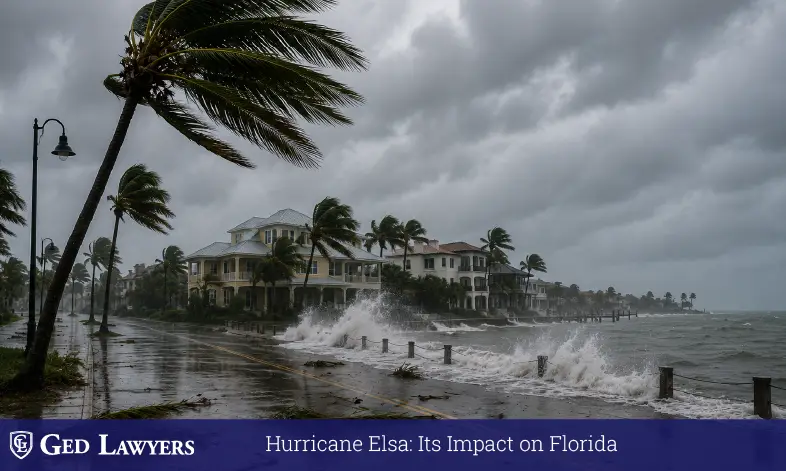
Hurricane Elsa: Its Impact on Florida

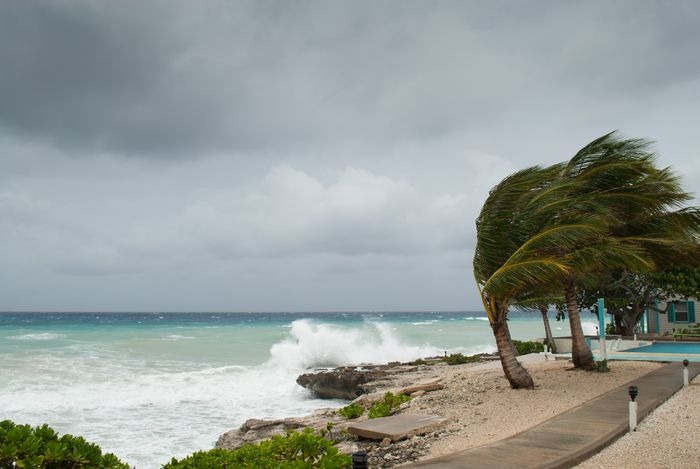
Tropical Storm Elsa formed on July 1, 2021, making this tropical storm the earliest to form in the storm season, since satellite records of these events began. Elsa developed unusually far south and east at this point in the hurricane season. She became a Category 1 hurricane not long after and destroyed parts of Barbados before turning back into a tropical storm and making landfall in Florida.

Elsa then moved up the northeastern shoreline, reaching Massachusetts before finally dissipating. If you were affected by Elsa in Florida and need help with storm damage or hurricane damage, as a result, contact Ged Lawyers for more information.

Hurricane Elsa

What Path Did Elsa Travel to and Through Florida?

Tropical Storm Elsa

The weather channel reported that on June 30, Tropical Depression Five formed around 1,000 miles to the east of the Windward Islands, located at the eastern end of the Caribbean Sea. Around six hours later, on July 1, it developed into Tropical Storm Elsa, the earliest tropical storm to develop in the region since 1966. By July 2, this storm system developed into a Category 1 hurricane as it crossed Barbados and St. Lucia.

Hurricane Elsa then devolved into a tropical storm as it made its way through Jamaica, western parts of Cuba, and then into the Florida Keys. By July 6th, Elsa became a hurricane again but reverted to a tropical storm by the morning of July 7, where it touched down in Steinhatchee, Florida. Horseshoe Beach experienced winds up to 70 mph, while Cedar Key clocked winds at 55 to 60 mph, driving rain and a storm surge of 2.7 feet.

Trees were downed in Baker County, Columbia County, and Jacksonville, Florida. Areas in Charlotte County, Lee Country, Manatee Country, and Sarasota County experienced flooded roads as well. Parts of Georgia and North Carolina also experienced extreme winds and rainfall before Elsa made its way north up the coast to New Jersey, New York, and Massachusetts.

Areas of Florida Affected by Elsa

Areas most severely impacted by Elsa in the state of Florida included:

  • Key West
  • Lower Keys
  • Cedar Key
  • Horseshoe Beach
  • Taylor County
  • Sarasota County
  • Baker County
  • Manatee County
  • Charlotte County
  • Lee County
  • Columbia
  • Jacksonville
  • North Port
  • Punta Gorda

Wind Damage

In Florida’s most affected areas, wind speeds measured anywhere from 55 to 70 mph. As a result, many places saw downed trees. In Dowling Park, Elsa either snapped or uprooted around 20 to 30 trees. A tornado hit the south side of Jacksonville, which also snapped trees and damaged power lines. At least one man is believed to have been killed in the U.S. when heavy rainfall and extreme winds snapped a tree that then fell on two cars.

Flood and Rain Damage

The city of North Port, Florida experienced 10 to 11 inches of rain as Elsa hit the city for around 3.5 hours. North Port Fire Chief Scott Titus had warned citizens of potential street flooding in the following days, as all that rain was to settle and move down the Myakka River watershed. Punta Gorda was similarly hit by Elsa’s rainfall, accumulating around 11 inches during the storm’s progression. Manatee County, Duette, Myakka City, Hidden River, Warm Mineral Springs, North Port, and some Anna Maria Island neighborhoods were also on high alert for localized flooding in the aftermath of Elsa.

How Floridians Need to Prepare for Future Storms and Hurricanes

Florida is prone to hurricane damage and storm damage. If you live in the state of Florida, it’s a smart idea to prepare for storm season in advance every year, just in case your area experiences a natural disaster. As a general guide, you should:

Create a Hurricane Kit

This kit should contain all the essentials you may need in the event of a storm or the aftermath of a storm. When a storm hits or the power goes out, many people rush to grocery and convenience stores to secure essential items, which can cause panic. Having a kit filled with batteries, flashlights, a first-aid kit, nonperishable foods, water, medicines, and other essential items can go a long way in storm preparedness.

Secure Your Home in Advance

As soon as you know a dangerous storm is coming, you should take steps to ensure your home experiences the least amount of damage possible. Consider taking the following steps:

  • Shutter your windows
  • Fasten the roof of your home
  • Reinforce your garage doors
  • Trim your trees and bushes
  • Clear your gutters
  • Bring in or secure your outdoor items that high winds may carry away

Prepare for Power Outages

Much of what happens in our daily lives depends on electricity. To prepare for power outages, consider topping off your gas tank in advance and filling an extra container if possible. Get cash out of an ATM in case you can’t run your card later, charge your cell phone before the storm hits, freeze your food in advance to make it last longer, and fill your tub with water so you can use it to flush and wash.

Need Help With Disaster Recovery After Tropical Storm Elsa? Contact Ged Lawyers Today

Florida is prone to hurricanes and tropical storms that often leave many parts of the state devastated. If you’ve experienced storm damage or hurricane damage as the result of Elsa, you may need an experienced attorney to help secure the disaster recovery compensation you need to rebuild your home and your life. Ged Lawyers may be able to help you navigate your insurance policy and win your claim in the aftermath of a natural disaster. Our property attorneys can handle cases dealing with windstorm damage, flood and water damage, and hurricane property damage.

Contact Ged Lawyers if your home and/or property suffered rain and wind damage from Elsa, and meet with one of our attorneys who can help you file an insurance damage claim. Your initial case review is always free.

By : Clarissa Romero

August 31, 2021

Florida Car Accident Lawsuit Guide

When Can I Sue After a Car Accident in Florida?

Introduction to Florida’s No-Fault Insurance Laws

Most states in the U.S. follow an “at-fault” liability model, where the insurance provider for the driver determined to cause the crash pays for all the damages stemming from the accident, including medical expenses, property damage, and pain and suffering costs.

However, Florida follows a no-fault model, where your insurance company covers certain expenses regardless of who caused the accident. Instead of the at-fault driver’s insurance paying for all medical costs, each driver’s PIP policy covers their own medical expenses.

Person injured after a car accident

What Are the Damage Limits for Florida PIP Claims?

Black damaged after accident

One benefit of PIP insurance claims in Boca Raton, FL is that you receive payment quickly after an auto accident. There’s no fight between insurance companies regarding who caused the crash. Additionally, what the insurance company must pay for is clearly outlined.

The major drawback to PIP; however, is the legal maximums on reimbursement. In Florida, PIP coverage tops out at $10,000. No-fault insurance covers 80% of your medical expenses following a crash. It also reimburses you 60% for any lost wages stemming from missed employment. However, no matter how high your medical bills reach, $10,000 is the most you’ll see from your insurance company under Florida’s PIP laws.

The $10,000 covered by PIP won’t go as far as you may think. For example, a standard broken leg costs $7,000 to fix. Car accident traumas often include injuries to multiple areas of the body. Any overnight stay in the hospital, such as after a concussion, can result in you approaching the $10,000 cap. Now you’re stuck footing the bill for any medical costs beyond PIP coverage.

What Is a Serious Bodily Injury?

Despite being a no-fault state, Florida allows you to sue another driver or their insurance company if you suffer a serious bodily injury and the other driver was negligent.

Florida state law defines a serious bodily injury as any of the following:

  • Significant and permanent loss of an important bodily function
  • Permanent injury that goes beyond scarring or disfigurement
  • Permanent scarring or disfigurement if they are significant
  • Death

If you suffer any of the above injuries, you can avoid Florida’s no-fault vehicle laws and seek to hold the other driver liable for the harm they caused.

Comparing PIP Coverage to Personal Injury Lawsuits

While PIP only allows you to recover medical expenses and lost wages, up to a maximum of $10,000, a personal injury car accident lawsuit can allow you to receive much more.

The types of damages that you can seek include:

  • Reimbursement for medical expenses
  • Full economic damages, including lost wages
  • Noneconomic losses like pain and suffering, mental anguish, and inconvenience

Additionally, there’s no maximum amount capping your recovery in an injury lawsuit. You’re able to seek compensation for all injuries you endured from the car accident. Therefore, if you suffered a severe injury in a crash, it’s crucial that you retain a car accident lawyer in Boca Raton, Florida to help secure the full amount you’re owed.

Recovering Property Damage After a Florida Car Crash

Florida’s no-fault auto insurance laws don’t affect how property damage is covered after a car crash. To receive reimbursement for the cost of your car repairs, you can file a claim against your personal insurance policy if it includes collision coverage, or you can file a liability claim against the other driver’s insurance policy if they were at fault.

Traditional liability laws mean that the at-fault driver or their insurance company owes you for all property damage stemming from the wreck. This typically means the costs to repair or replace your vehicle, but it can also include costs for repairing or replacing your personal property that was inside your car. If the crash ruined your phone, laptop, or other items, the other driver is responsible for making you whole.

Property damage costs can add up quickly following a traffic accident and being without a vehicle can cost you employment opportunities or wages. If an insurance company is unwilling to cover your property damage, you can sue to enforce your rights.

When Do You Need a Florida Car Accident Lawyer?

Being in a traffic accident is a terrible experience, but dealing with insurance companies in the aftermath of the wreck can be even worse. After seeking medical treatment, the first thing you should do is contact an experienced Florida car accident lawyer. Insurance companies will do everything in their power to pay you as little as possible, so it’s crucial that you have a skilled personal injury attorney on your side as early in the process as possible.

The motor vehicle accident attorneys at Ged Lawyers can review your case and explain whether you can file a lawsuit to receive full compensation for your injuries. Our skilled legal team has a deep understanding of Florida law, and we will work with your doctors and other medical providers to thoroughly evaluate injuries and damages you’ve suffered.

Whether you’re filing a personal injury lawsuit or a PIP insurance claim, Ged Lawyers can help. We know how terrifying this process can be, and we will be by your side every step of the way. Our experienced car crash lawyers can evaluate your case and determine the best way to win you the most compensation possible. To meet with a member of our team, contact our office at 844-443-3529 or online to schedule a free review to discuss your case.

By : Clarissa Romero

August 31, 2021

Florida Slip And Fall Rights

Slip and Fall Rights in Florida: What if It Happens on Government Property?

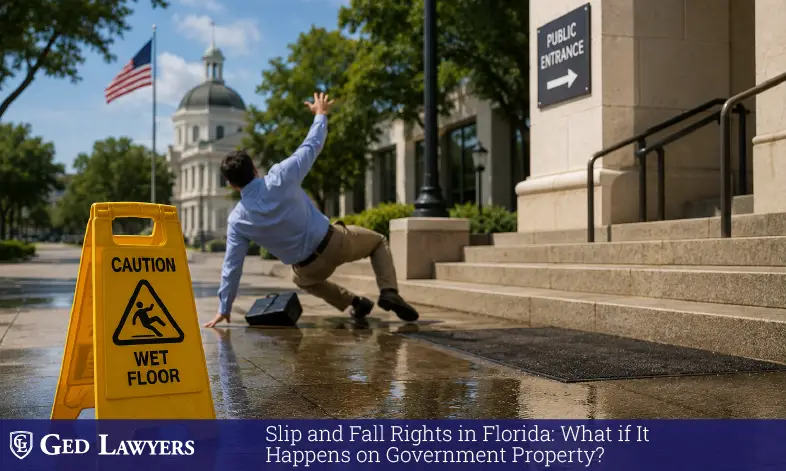
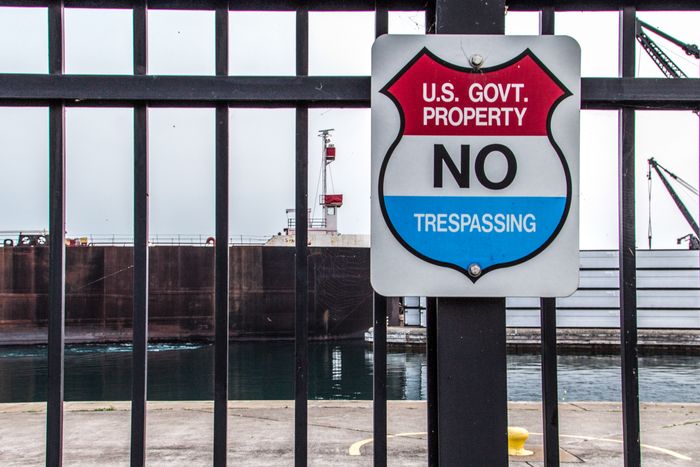
Slip and fall accidents can occur anywhere at any time. However, if you slip and fall on government or public property, your case is more difficult to argue than a claim against a private property owner. This is because, while many of the same legal requirements for proving your case remain, special protections or sovereign immunity granted to the government may thwart your claim. However, it’s still possible to win your slip and fall case against a government entity, but working with an experienced personal injury attorney may be your best bet in securing the compensation you need.

No trespassing sign on gate

What Defines Government Property in Slip and Fall Cases?

Person holding his knee

Government or public properties in slip and fall cases can include any locations owned or maintained by the government, as opposed to privately owned by an individual or company. This includes, but isn’t limited to:

  • Government buildings and grounds
  • Public sidewalks, elevators, stairwells, ramps, and handrails
  • Public pools, parks, libraries, and parking lots
  • Pedestrian crosswalks or paths

How Location Affects Claim Treatment

Another complexity introduced by public property slip and fall claims is that of varying processes, requirements, and deadlines. Specific county government properties, state-owned public properties, and federally owned and maintained properties may all impose various rules around slip and fall cases.

There may be different forms, processes for filing claims, and deadlines associated at each level, so it’s important you are clear on which entity was involved in your accident and what those processes and requirements look like for your case.

Filing a Slip and Fall Claim Against a Government Entity

Like slip and fall incidents on privately owned property, filing this type of personal injury claim against a government entity requires you to meet certain conditions. These conditions require you to show:

  • A government agency owns or controls the property on which your accident occurred
  • A tripping, slipping, or otherwise unsafe condition on the government-controlled property led to your accident
  • The government entity was negligent in its duty of keeping the premises clear of this hazard and either:
    • Knew the hazard existed and failed to address it in a timely manner
    • Should have known the hazard existed as a result of routine maintenance checks
  • The government agency’s negligence in addressing this hazard directly led to your accident and resulting injuries

The above represents a general guide for the conditions that your claim must satisfy in order to argue a slip and fall case against a government entity. Additionally, you must be thorough in the claims process by documenting the hazardous area at the time of the incident, as well as your immediate injuries and all subsequent medical treatments you receive as a result of your injuries. As with privately owned property involved in slip and fall cases, this documentation can go a long way in establishing your claim.

The process of filing your claim, however, takes on different requirements than the typical slip and fall case made against a private property owner. In addition to the strict and varying deadlines different government agencies impose, the most important point is that you must provide a specific kind of notice to the government agency involved. It’s imperative you send this notice to the correct office in a timely manner. It is also critical that you follow the instructions on this notice and fill it out completely. Failing to take these steps may result in you forfeiting your right to bring a claim against the government for slip and fall damages.

It’s also important to work closely with a personal injury attorney in slip and fall cases brought against government entities in order to handle sovereign immunity defenses. Under English Common Law, the historical basis and framework for U.S. laws, the government was completely immune from any suits based on negligence due to some quirks of history under King Henry VIII, which was called “sovereign immunity.” As the United States began to form its own laws, parts of the absolute bar imposed by sovereign immunity were overruled by Statutes. However, these Statutes dictate certain areas where the immunity was waived and erected certain defenses that are unavailable to private landowners. There are also certain notice requirements that must be strictly adhered to or a claim may be barred by a technicality. Also, the waiver puts caps on recoverable damages under almost all circumstances.

Florida Statute of Limitations for Slip and Fall Claims

The Florida statute of limitations for slip and fall claims is two years from the time of the incident. However, federal, state, and municipal government agencies can all have shorter deadlines for filing your claim, and missing these deadlines can mean forfeiting your right to pursue compensation for your injuries. Some agencies may require notice of your claim in as little as 30 days from the time of the accident, so it’s imperative you determine the entity responsible for your accident and its processes as soon as possible.

Do Government Entities Have Immunity From Slip and Fall Claims?

Part of what makes government slip and fall cases begins with the understanding of sovereign immunity, mentioned above. No claims alleging negligence could be brought against the government at all; whether slip and fall or otherwise. This absolute immunity was overruled in part by Statutes, but there are some areas where the government is completely immune from a suit.

In Florida, this body of law is controlled by Florida Statute sec. 768.28, as interpreted by the case law. If this sounds complex, it gets even more complicated the deeper you go. The Statute controls formal notice requirements (which you must strictly comply with and can effectively shorten the statute of limitations) and establishes certain defenses that don’t apply to private landowners, placing caps on the amount of money you can collect as an injured person. You can’t sue the individual government employees involved, only the political subdivision that was in control of the property. An additional challenge is that your jury pool will typically be taxpayers who reside within the community you’re suing.

For federally owned or controlled properties, the rules are entirely different from Florida law. This body of law is governed by the Federal Tort Claims Act of 1948 and interpreting case law. The formal notice requirements and defenses are totally different from Florida as well as the caps on recoverable damages. Additionally, any cases against a federally owned or controlled entity need to be brought in federal court, not state court. Whenever you have a slip and fall on any governmentally owned property, whether state or federal, it is critical to get an attorney intimately familiar with the twists and turns of sovereign immunity on your side as soon as possible.

Involved in a Slip and Fall Accident on Government Property? Contact Ged Lawyers to Discuss Your Options

Slip and fall accidents that occur on government or publicly owned property are complicated. This is because government entities typically have specific processes and timelines for filing a claim, as well as caps on damages available to award victims, and these can differ depending on the level of government involved. For this reason, it’s important to have an experienced personal injury attorney on your side if you have been involved in this kind of accident. To learn more or to discuss the details of your case, schedule your free consultation with Ged Lawyers today. You may also call us at 844-443-3529 or 561-995-1966.

By : Clarissa Romero

August 11, 2021

Florida Homeowners Property Damage Guide

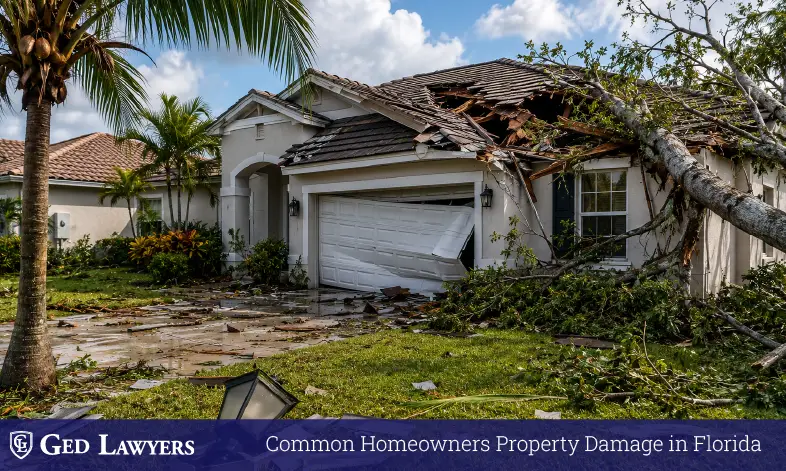
Common Homeowners Property Damage in Florida

Florida residents know that even though the state’s weather creates a constant threat of property damage, homeowners property damage coverage can be limited. It’s crucial that you understand what types of damage your insurance policy covers and know strategies for maximizing the amount your insurance company pays to settle your property damage claims.

Homeowners Property Damage

Common Types of Property Damage to Florida Homes

Beaches, lakes, and bright, sunny days are Florida’s selling points. However, the postcard-worthy weather can quickly become nasty, as every Floridian knows. As a result, Florida is a particularly vulnerable state to events that can cause home property damage.

Wind and Hurricane Damage

Property damage claims

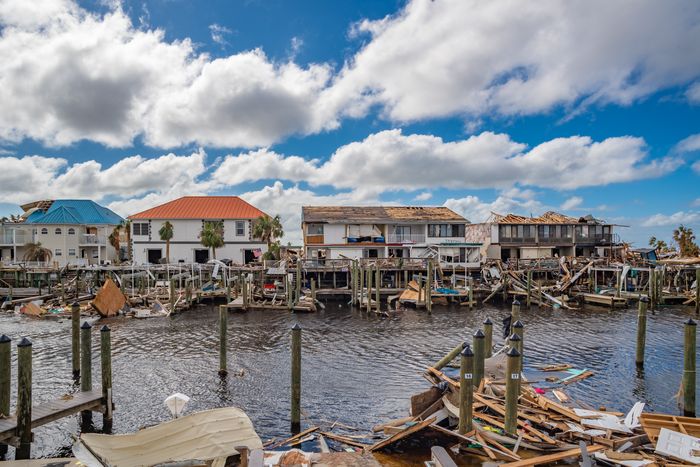
Hurricanes and high winds are a fact of life in the Sunshine State. Even without catastrophic damage, wind can necessitate roof repairs. A hurricane can fling debris that breaks windows or tears siding. Fallen trees can crash through your home, causing damage to the roof, gutters, ceiling, walls, and more. In the worst-case scenario, an intense hurricane can leave your home in ruins.

Hurricane damage claims may have a separate deductible for Florida homeowners. Read over your individual policy to understand how costly hurricane damage may be for you.

Water and Flood Damage

In Florida, water is never far away. Flood damage typically affects floors, baseboards, and other low-lying parts of your home. A burst pipe can create issues on higher floors. While remedying this type of damage can be expensive, foundational problems may require even more costly repairs. If you have had any flooding in your home, make sure you have a professional examine the foundation.

Standard homeowners insurance coverage in Florida doesn’t extend to flooding. You need to purchase a separate rider for your policy to include flood damage. Water damage from broken pipes or appliances is generally treated differently. Most standard homeowners insurance policies cover this type of damage. However, if the flood damage resulted from storm surges, extremely high tides, or a hurricane, your insurance company may try to deny paying a claim. Even if you have flood coverage, the specific way your policy reads determines if you get reimbursement for the damage to your home.

Hail Damage

Hail is a remarkably subtle type of damage for Florida homeowners. While cars typically show hail damage clearly, homes hide resulting blemishes. If your area suffers a hailstorm, you need to thoroughly inspect your roofing for dents or dings.

It could take a roof that suffered hail damage years to begin leaking. By that time, it may be too late to file a property claim with your insurance company. Once the weather is safe, a professional check on your roof is advisable. If there is damage, you can file a claim with your insurance provider.

Fire Damage

Fire damage claims in Florida vary from other types of property problems. First, flames and smoke cause different issues than the weather. Second, a fire can start—and spread—anywhere within the home. While the kitchen or a backyard grill are common areas for ignition, electrical fires can occur anywhere. Homeowners insurance typically covers the costs of repairs and replacement of belongings.

Other: Sinkholes and More

Some types of property damage occur in Florida far more often than in other states.

Sinkholes are a significant problem on the peninsula due to a layer of rock beneath the ground. Florida’s wet climate makes these issues worse. That’s why Florida has more sinkholes than any other state. A sinkhole can wreck your home and the value of the land it sits on. Your homeowners Insurance policy may not cover sinkhole damage that doesn’t result in the complete destruction of your home.

Tornadoes are also a Florida-specific problem. Despite the common association with Oklahoma and Kansas, Florida has more tornadoes per 10,000 square miles of land than any other state. Especially with Florida’s higher and denser population, tornadoes are a real threat to homeowners. Unlike floods, insurance providers usually don’t require special coverage for tornado damage.

Finally, mold is a continuous threat to properties in Florida, particularly if your home suffers water or flood damage. However, the constant high humidity can cause trouble in any poorly ventilated space. Mold damage can be costly to remedy, and homeowners insurance typically covers it only if a covered incident caused the damage.

Statute of Limitations on Filing a Property Damage Lawsuit

All homeowners should be aware of the statute of limitations for filing a lawsuit regarding insurance claims. A statute of limitations is a legal rule that prevents you from suing once a specified amount of time passes. In Florida, the statute of limitations for breach of contract suits is five years.

Because an insurance policy is a legal contract, this means you only have five years after an incident to bring legal action against your insurance company. Filing a lawsuit is sometimes the only option you have, whether your insurer denies your claim outright or doesn’t offer a full settlement,

Therefore, moving quickly after your property suffers damage is essential. Insurance companies can drag their feet and make you think a better offer is coming in the future. Starting the clock on a claim soon after you need it can help you avoid being subject to the statute of limitations in the future.

Filing a Property Damage Claim

If you’re unfortunate enough to need to file a property damage claim with your insurance company, follow these steps to protect yourself.

First, contact your insurer as soon as possible after an incident. This puts you in line for an appointment with an adjuster. The insurance company may also offer services to prevent further damage, such as temporary roof or window repair.

Next, take pictures of everything. Then take more pictures. Documenting the damage as soon as it occurs can help defend against bad faith insurers. Photograph problem areas extensively, as well as any items you need to throw out before you trash them.

Finally, keep notes on who you talk to at your insurance company and when. This is a hectic process for you, so recording all interactions will assist your memory later when determining how much your claim is worth.

When to Contact a Lawyer

One additional suggestion when filing a homeowners policy insurance claim: Call a property attorney. Having a lawyer on your side makes the entire claims process smoother. The experienced team at Ged Lawyers can offer suggestions for what to do before, during, and after filing a claim.

It’s important to remember that insurance companies are not on your side, and a first offer is never the best. Ged Lawyers can handle negotiations with your insurance provider to ensure you receive the settlement offer you deserve. If your Florida home has suffered property damage, schedule a free case review with the skilled attorneys at Ged Lawyers today to discuss your options.

By : Clarissa Romero

August 11, 2021

Ged Lawyers Acquires Pittman Firm

Ged Lawyers Acquires The Pittman Firm

Boca Raton, Fla. – August 11, 2021 – Ged Lawyers is pleased to announce they have acquired The Pittman Firm in Panama City, Fla. The Pittman Firm was founded by Wes Pittman who concentrates his practice in the areas of personal injury, wrongful death, product liability and employment discrimination.

Ged Lawyers has its headquarters in Boca Raton, as well as offices throughout Florida, including one in Panama City where it has been assisting victims of Hurricane Michael, the Category 5 hurricane that slammed into the area in 2018.

“By acquiring The Pittman Firm, we will not only be able to continue to help consumers level the playing field by going up against multibillion-dollar insurance companies, but we also will be bringing our other practice areas to the Panhandle,” said C. Glen Ged, one of the firm’s founding partners. “Combining our firms will expand our geographic footprint throughout Florida and offer greater resources and bench strength to both of our firm’s clients.”

Added Pittman: “Our philosophy, firm culture and long-term goals align, so bringing together our two firms made perfect sense.”

Ged Lawyers is a full-service law firm with a rich 25-year history of providing legal counsel in several practice areas including: personal injury and wrongful death, PIP insurance recovery, disaster recovery and property damage claims, asset protection and real estate.

At Ged Lawyers & The Pittman Firm, we are committed to serving clients throughout Florida. As a full-service personal injury law firm, we have offices across the state. If you or a loved one were injured by the negligence of another, contact our legal team today.

By : Clarissa Romero

August 11, 2021

Bicycle Accident Injury Lawyer Help

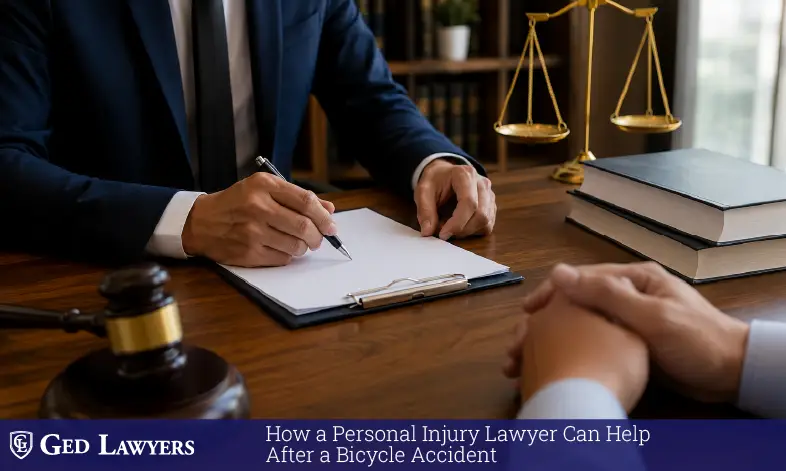
How a Personal Injury Lawyer Can Help After a Bicycle Accident

Riding a bicycle is fun and a great form of exercise and transportation, but it can be dangerous, too, with over 300,000 bicyclists in emergency rooms across the country in 2018 alone. For a bicycle rider, an accident can cause significant injuries and even death. Following an accident, it can be hard to figure out how you’ll pay for medical costs and make up for missed time at work. Was a driver responsible for your crash? Did the bike malfunction? Was there a hazard in the road? All these questions impact who’s responsible for your crash.

Couple riding bicycle on beach

Bicycle Accident Statistics

Bicycle and a helmet lying on road

Recent years have seen an increase in bicycle ridership, both for transportation and for pleasure. Depending on where you live, biking can be dangerous, especially if your community doesn’t provide protected bike lanes or trails. In fact, over 1,000 people died because of bicycle accidents in 2018.

One common reason for these accidents has little to do with biking itself. Instead, according to the National Highway Traffic Safety Administration (NHTSA), 45,000 people were injured in 2015 after bicycle-automobile crashes. Drivers who refuse to share the road or give the proper right-of-way to cyclists put everyone on the street in danger.

The NHTSA reported that more than half of all bicycle-car accidents occurred at traffic intersections. Particularly worrisome is the possibility of a hit-and-run bike crash where the driver flees the scene of an accident, leaving you injured on the ground.

In a bicycle accident, head and neck injuries are prevalent. Other typical injuries include broken bones, severe scrapes, and muscle sprains. All of these injuries require professional diagnosis and treatment. Medical professionals can often miss head and neck trauma, especially when you’re not in pain. If you are unlucky enough to suffer an accident while riding your bike, make sure you immediately seek proper medical care.

Seeking Compensation After a Bicycle Accident

Determining how to proceed after a cycling crash can be difficult. If you’re in a collision with a vehicle, your personal injury protection may reimburse specific medical bills. However, it’s not always clear that insurance is the best route to make you whole. You should speak with a Boca Raton bicycle accident lawyer to discuss Florida’s personal injury laws. Your attorney can help create a strategy for getting you what you’re owed.

Negligent Driver Liability

Because a bicycle-car accident is so dangerous for the rider, one typical outcome of a crash is pursuing a personal injury lawsuit against the driver for negligence. Motorists have a duty under Florida law to operate their vehicles responsibly. Careless or distracted driving can cause significant injuries to bike riders due to the lower profile bikes present than cars.

Drivers may fail to yield, run a stoplight or sign, text while driving, or drive under the influence. Any of these can be considered negligent conduct, particularly when it results in a collision with a cyclist. There are many other specific ways a driver can be negligent and you should speak with a bike accident lawyer to determine whether a motorist can be held liable after a crash.

Wrongful Death Lawsuits

In the horrible instance that a bicyclist dies after a crash with an automobile, the victim’s next of kin can seek to hold the motorist responsible. A wrongful death suit can be maintained if your loved one would still be alive, but the suit would be for the driver’s negligence. In addition to other damages available, this type of lawsuit can include compensation for the loss of support, care, and future earnings of the victim.

Accidents Caused by Road Conditions

Most roads are property of a state or local government, and that government is responsible for the roads’ upkeep. Governments are typically immune from lawsuits by their citizens. However, if your community breached a duty to provide safe streets, you may be able to seek relief after an accident.

This is especially true if the government was aware of a hazardous condition and failed to issue a proper warning. For example, suppose that the city temporarily dug a trench to reach a pipe as part of road maintenance. The city needs to put up warning signs around the trench to give you fair warning. If you crash into the ditch on your bike because there are no cones, barrels, or signs around it, the city may be negligent and liable for your injuries.

Bike Manufacturer Liability

Some bicycle accidents occur without any fault of the rider, the road, the environment, or even motorists. Like all manufactured products, bicycles occasionally have flaws. If a defect causes a crash in which you suffer injuries, you can file a product liability lawsuit against the company that made the bike. For example, if your bike chain has a crucial deficiency, it could snap when shifting gears, leading to a loss of control.

Damages Available in a Bicycle Accident Lawsuit

Florida bicycle accident laws govern what damages are available in a lawsuit and how they’re calculated. Generally, if another party like a driver was negligent and caused your accident, they’re liable for all reasonably foreseeable damages. These can include your medical bills, including rehabilitation and therapy, and your lost wages from missing work. The damages can also compensate you for pain and suffering, mental anguish, and inconvenience.

If you’ve been injured in a bicycle accident, you have options. Contact a bicycle accident lawyer as soon as possible to ensure that you receive adequate compensation for your injuries. At Ged Lawyers, our skilled Florida bike accident attorneys have knowledge and experience securing reimbursement for the victims of various types of bicycle accidents. We’ll review the circumstances of your accident, evaluate whether you can pursue compensation, and fight for you to receive everything you deserve. To meet with a member of our team, contact our office at 844-443-3529 or online to schedule a free case review to discuss your situation.

By : Clarissa Romero

August 11, 2021

Reckless Driving Versus Distracted Driving

Reckless Driving vs. Distracted Driving

Distracted driving and reckless driving can both cause accidents and lead to traffic tickets, but only reckless driving is a crime that can result in jail time.

Everyone makes mistakes when driving, but what determines which mistakes are serious enough to warrant criminal charges? It usually has to do with whether the driver causes an accident and how much harm it causes in terms of vehicle damage and personal injuries. If you get injured in a car accident, the fact that the other driver got a traffic ticket, or even got arrested, for causing the accident can help you persuade the insurance company that you are entitled to a settlement and can support your case if you file a lawsuit. If the police report about your car accident mentions distracted driving or reckless driving, Boca Raton car accident lawyer can help you make sense of it all.

Distracted Driving Laws in Florida

Distracted driving is when you take your eyes off the road, remove your hands from the steering wheel, or otherwise divert your attention from the drive while the car is moving. Text messages and other interactions with mobile phones are a major cause of distracted driving, but they are not the only cause. Drivers can also get cited for distracted driving if they apply makeup while the car is in a gear other than park or if they allow dogs to ride in the car without pet seat belts or pet carriers. Florida enacted a law against distracted driving in 2019, and pursuant to this law, you can get a $30 traffic citation the first time you get pulled over for distracted driving; the fee increases with repeat citations. You can also get points against your driver’s license.

What is Reckless Driving?

Reckless driving means operating a motor vehicle in a dangerous way that shows disregard for the safety of others. It is possible to get a traffic ticket for reckless driving whether or not you cause an accident; for example, if you drive 30 miles per hour above the speed limit (such as driving 65 mph on a road where the speed limit is 35 mph), it counts as reckless driving. If you cause an accident that involves personal injuries while driving recklessly, then reckless driving is a criminal misdemeanor, and your sentence can include fines, probation, jail, or some combination thereof.

What Reckless Driving and Distracted Driving Mean for Your Car Accident Case

Getting a good settlement from the insurance company or winning a car accident lawsuit requires persuasive evidence that the other driver’s negligence caused your accident. Distracted driving and reckless driving are irresponsible actions that fit the definition of negligence that would enable you to recover compensation in your case.

Contact Ged Lawyers About Reckless Driving and Distracted Driving

A car accident lawyer can help you decide how to proceed if you were injured in an accident involving reckless driving or distracted driving. Contact Ged Lawyers in Boca Raton, Florida to discuss your case.

By : Clarissa Romero

August 9, 2021

Injury Claim Court Process Guide

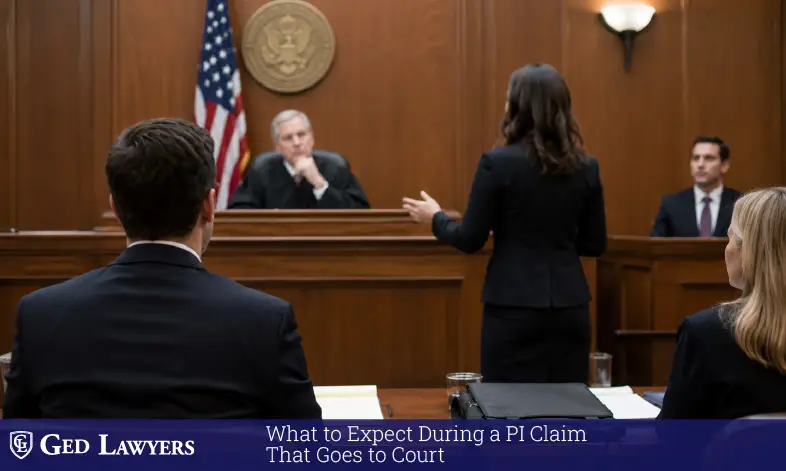
What to Expect During a PI Claim That Goes to Court

You should expect months, or even years, of gathering evidence and trying to persuade the judge that this evidence should or should not be used in the trial, and your case will most likely settle before it reaches the trial stage.

Some people who contact personal injury lawyers after suffering financial hardship due to an accidental injury are surprised to find out that the lawyer can get them enough money to cover their medical bills without filing a lawsuit. Sometimes all it takes to resolve a personal injury claim is for your lawyer to send some emails and make some phone calls. If your lawyer advises you to file a lawsuit, do not immediately start seeing dollar signs before your eyes. It means that getting your money will take more work than just your lawyer talking to the insurance company on your behalf. Winning a personal injury lawsuit at trial is not a sure thing, but the good news is that the defendant will probably reach a settlement with you before your case ever gets to trial. Your Boca Raton personal injury lawyer can give you sound advice at every stage of the process.

Discovery in Personal Injury Lawsuits

Between the time the plaintiff (the injured person) files the lawsuit in court, also sending a copy of it to the defendant (the person or company legally responsible for the accident) and the time of the trial is usually more than a year. The period in between is called discovery. During the discovery phase of the case, the lawyers for the plaintiff and defendant request documents from each other and take depositions (interviews with witnesses) of people who have relevant information about the case. They also frequently meet with the judge when they disagree about whether the other party should be allowed to see a certain piece of evidence or discuss the evidence in front of a jury. The judge sets a trial date when discovery begins, but it often gets postponed at least once.

Arbitration, Mediation, and Summary Judgment

There are several ways a case can end other than a jury returning a verdict on which the judge bases their ruling. Early in discovery, the parties can agree to resolve the case through mediation or arbitration instead of having a trial. Likewise, the defendant may try to get the court to issue a summary judgment, in which it declares that it is not possible to win the case. Likewise, the defendant might offer to settle the case outside of court for an amount of money the plaintiff considers fair.

Isn’t This Expensive?

If you have heard about the hourly rates that some types of lawyers request, you might worry that all of this is unaffordable. Many personal injury lawyers accept payment on contingency, where you pay your lawyer after receiving your settlement or damages award, but not before.

Contact Ged Lawyers About Personal Injury Lawsuits That Go to Court

A personal injury lawyer can help you resolve your case with or without a jury trial. Contact Ged Lawyers in Boca Raton, Florida to discuss your case.

By : Clarissa Romero

August 2, 2021

Florida Slip and Fall Laws

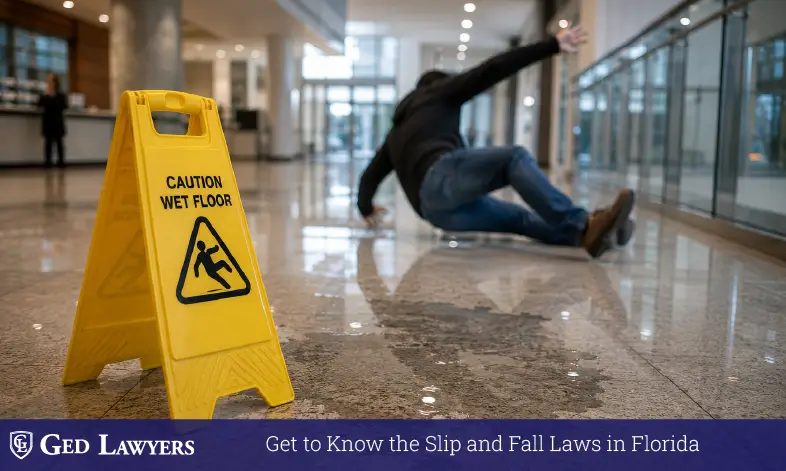
Get to Know the Slip and Fall Laws in Florida

Slip and fall accidents in Florida fall under the umbrella of personal injury cases. This type of personal injury case typically involves an individual slipping or tripping on another person or a company’s property. Slip and fall cases hold the other person or company liable for the negligence that led to the incident and resulted in injury. Before pursuing a slip and fall case in Florida, however, ensure your case meets the legal requirements outlined by the state. We discuss Florida’s slip and fall laws below, but consider contacting an attorney at Ged Lawyers to discuss the specific details of your case.

Slip and fall incident report

Florida Slip and Fall

Cleaning in progress sign

Slip and fall laws in Florida hold individuals or companies liable for this type of incident if it meets certain conditions. These conditions include the duty of an individual or company to keep their premises clear and safe for the public. Another condition involves a breach of this duty—the company fails to meet the first condition and therefore shows to be negligent in its duties. Lastly, it must be the case that these first two conditions directly led to an injury.

Duty: Establishing the duty of an individual or company to maintain their property in a certain way can vary depending on the circumstances. For example, a privately owned piece of property has a more relaxed set of maintenance standards that the property owner must uphold. Since the property is private, the owner only needs to maintain the areas used by the public, like sidewalks, unless guests are invited in.

It’s more often the case that companies, such as stores, are sued for slip and fall injuries in Florida. In these cases, the duty to maintain the premises and keep it clear of hazards is stricter. The public is viewed as “invitees” and companies must go to greater lengths to make sure the premises remains free of liquids, debris, uneven surfaces, and other natural hazards that may cause injury if left unaddressed.

Breach of Duty: Establishing a duty of care is more straightforward than establishing a breach of duty. Often, establishing duty simply means looking to Florida’s slip and fall statute and determining what duty of care an individual or company owes to the public. Establishing a breach of duty requires a more nuanced approach than this. You must provide evidence of the unsafe conditions that led to your injury in addition to showing that the individual or company knew about or should have known about these conditions at the time of your accident. You establish a breach of duty when you can clearly show that the individual or company was not diligent in keeping their property safe and that this negligence directly led to your accident and injuries.

Transitory, Foreign Substances

Florida upholds a specific law around slip and fall accidents that involve a transitory, foreign substance. These substances include liquids, objects, or other slippery substances left on the floor or ground of a business establishment that cause an individual to slip and fall. A common location of transitory, foreign substance involved in slip and fall cases is supermarkets, where recently mopped areas, product spills, and other substances may frequent the floors.

To prove this type of slip and fall case, an individual must first show that a foreign, transitory substance caused their slip and fall. Next, this individual must show that this substance was on the floor for a sufficient length of time when it should not have been; that is, the property owner or their employees had ample time to locate the substance and take corrective action to prevent a potential accident.

This latter element is the most difficult to prove; however, it’s becoming easier with the use of recorded evidence captured by business cameras. Often, these cameras are rolling from the moment an individual enters a business to the time the incident occurs, and they often provide timestamps that help set up a reliable timeline. In some situations, camera footage captures employees walking by the substance that caused a slip and fall without taking corrective action; in these scenarios, proving this latter element in a slip and fall case is relatively straightforward. Since footage is often crucial in slip and fall cases, notifying the business immediately after a slip and fall occurs helps ensure the camera footage is captured and preserved for your case.

Florida Slip and Fall Case

An example of a transitory, foreign substance slip and fall accident is that of Owens v. Publix Supermarkets, Inc. In this case, the plaintiff, Owens, slipped and fell on a piece of peeled banana that was on the floor of a Publix supermarket. While this item qualified as a transitory, foreign substance, Owens failed to provide evidence to show how long the banana was left on the floor. Since it was unclear whether the banana had been there long enough to conclude that a sufficient amount of time had gone by in which Publix employees should have found and removed this substance, Owens lost her case.

In a similar case, Ramey v. Winn Dixie Montgomery, Inc., the plaintiff, Ramey, brought a slip and fall case against the Winn Dixie supermarket after suffering back injuries due to a fall inside the establishment. In this case, the court found Ramey and the Winn Dixie establishment 50% negligent each. While the plaintiff didn’t receive damages for future medical care and non-economic damages they were pursuing, the courts did award Ramey the total amount of medical bills incurred, as well as $6,000 for past pain and suffering.

Slip and Fall Statute of Limitations in Florida

Slip and fall incidents can occur anywhere and at any time. However, not every claim establishes the legal requirements set forth in Florida’s slip and fall laws to the plaintiff’s satisfaction. This is because the evidence and documentation of a slip and fall case matter greatly in proving these requirements, and a strong legal team often makes the difference in a successful claim.

The plaintiff must also consider the statute of limitations involved in a slip and fall claim. Florida grants injured parties the ability to file a claim a maximum of four years from the time of the incident.

How to Prove a Slip and Fall Claim

To prove a slip and fall claim in Florida, you need to document the unsafe conditions that led to your injury, such as taking pictures. You also need to prove that the property owner had a duty of care toward you and that duty of care was breached when they failed to take reasonable action in regard to maintaining the property, which would have prevented your accident.

You also want to document your injuries immediately and keep a paper trail of your visits to doctors, comments, and bills. Lastly, be ready to face counterarguments that the property owner is likely to bring against you. In Florida, property owners can use “comparative negligence” to argue your own carelessness contributed to the accident, and therefore, you should shoulder part of the costs associated with the injury. To successfully prepare your case and prove a slip and fall claim, get in touch with an experienced personal injury attorney.

Filing a Slip and Fall Claim

To file your slip and fall claim, you need to take crucial steps as soon as the incident occurs and follow through the legal process by doing the following:

  • Report the accident to the property owner or manager immediately
  • Get names of nearby witnesses
  • Take photos of the area and your injuries
  • Seek medical attention for your injuries
  • Explain the origin of your injuries to your health care provider
  • Fill out accident reports, if applicable
  • Do not speak to an insurer without legal representation
  • Attend your scheduled medical treatments
  • Document days missed from work and wages lost as a result of your injuries, if applicable
  • Keep your account of the event consistent, especially in depositions
  • Work closely with your attorney to provide documentation and paperwork required for your claim

Damages Owed to a Slip and Fall Victim

The damages owed to you as a slip and fall victim in Florida can be reduced if you’re found to be partially responsible for your injuries. These damages could include:

  • Medical expenses for treatment, rehabilitation, and medication
  • Lost wages and loss of future earnings, if applicable
  • Pain and suffering
  • Diminished quality of life
  • Punitive damages, if applicable

Sometimes, defendants in slip and fall cases make settlement offers in order to avoid court proceedings. In some cases, such offers are worth taking, especially if they are enough to cover the expenses you’re seeking damages for. However, you should make this decision with your attorney, as a settlement offer may not be right for you.

Injured in a Slip and Fall Accident? Contact Ged Lawyers

If you were involved in a slip and fall incident and are considering a legal claim, contact Ged Lawyers to discuss your case with an experienced personal injury attorney. We can examine the details of the event and determine your legal options in a free initial consultation. Call us at 561-995-1966 or 844-443-3529.

By : Clarissa Romero

July 27, 2021

Search

Categories

Recent Posts

Tags